Last updated November 21, 2026
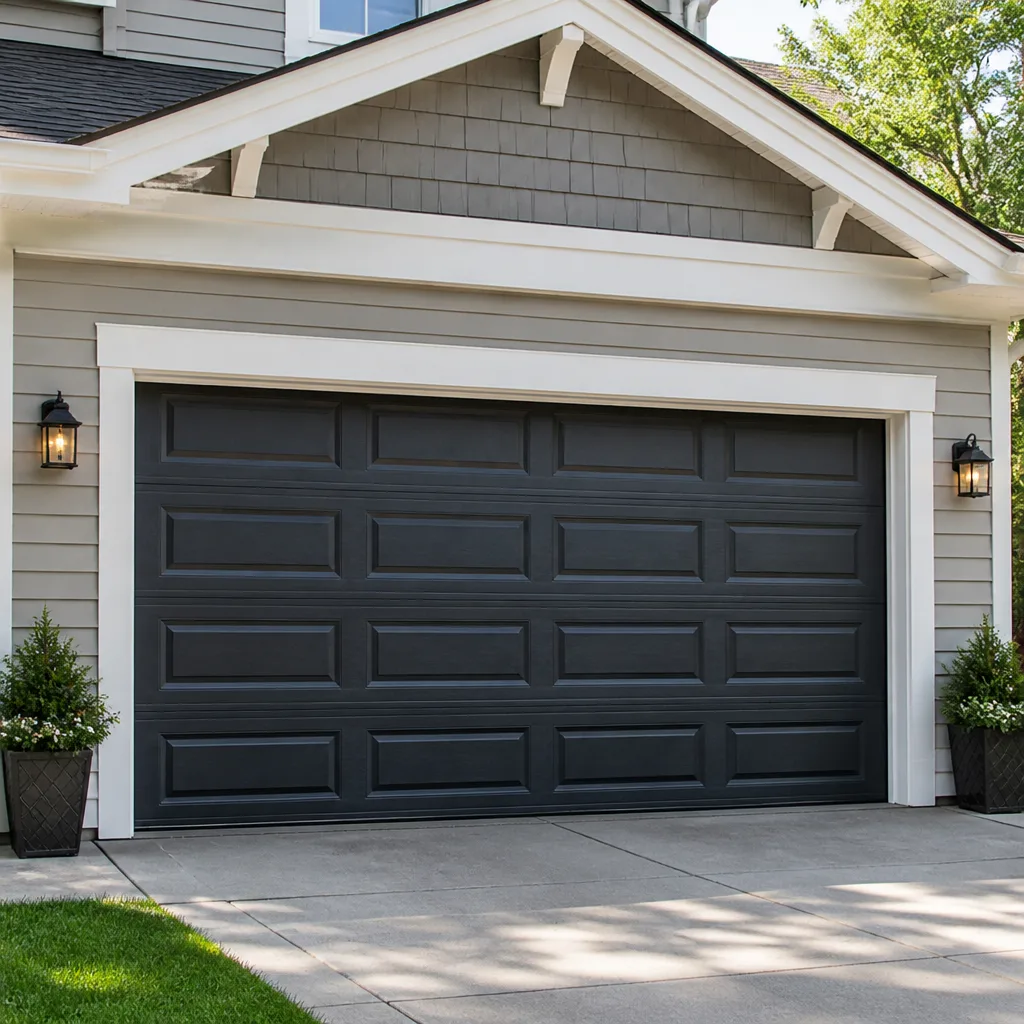 Raised-panel steel
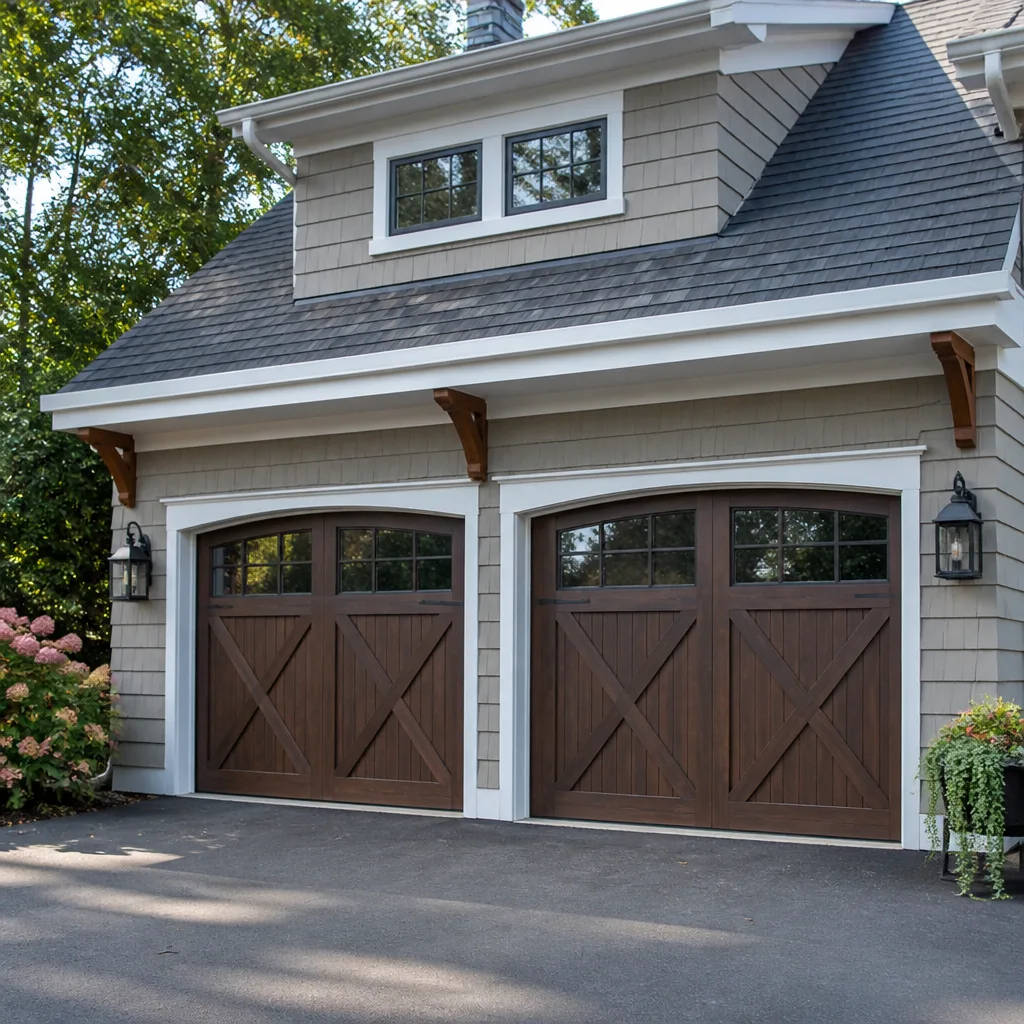 Carriage house
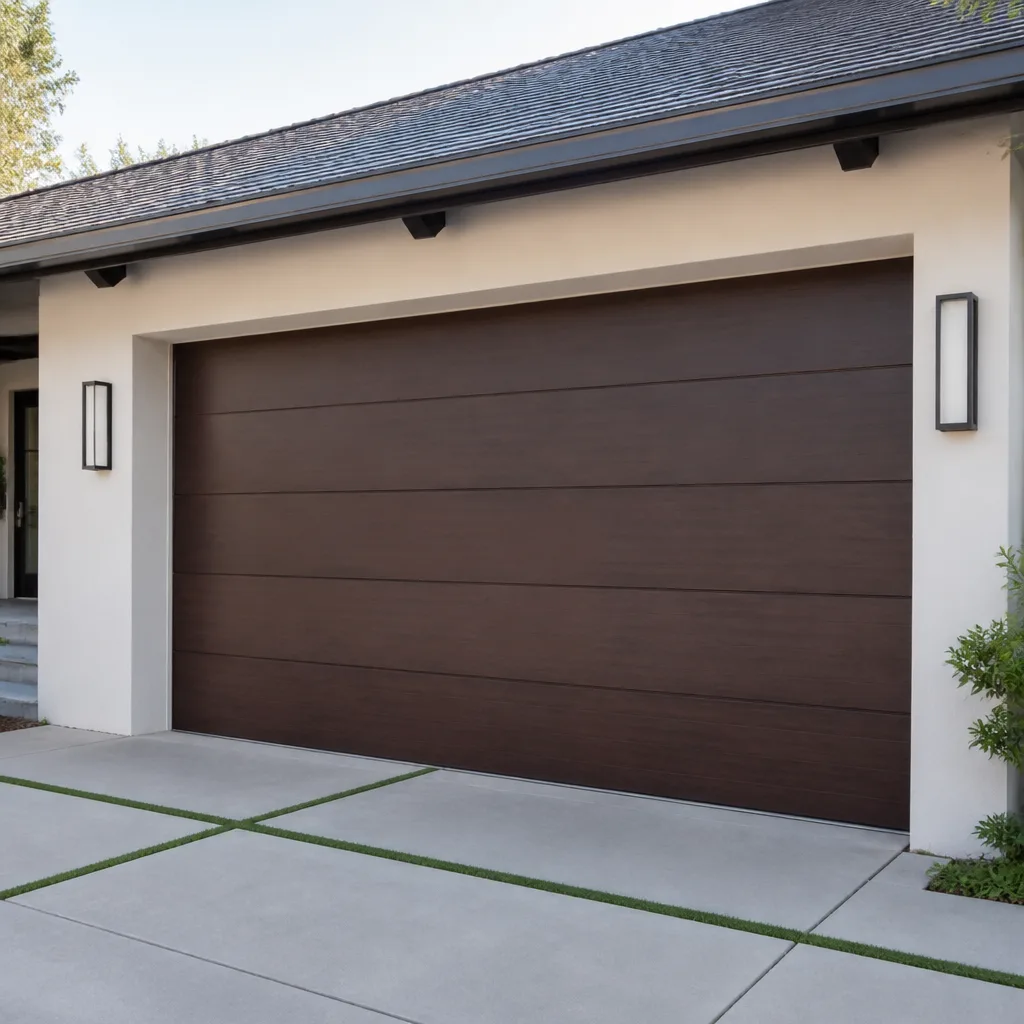 Modern flush
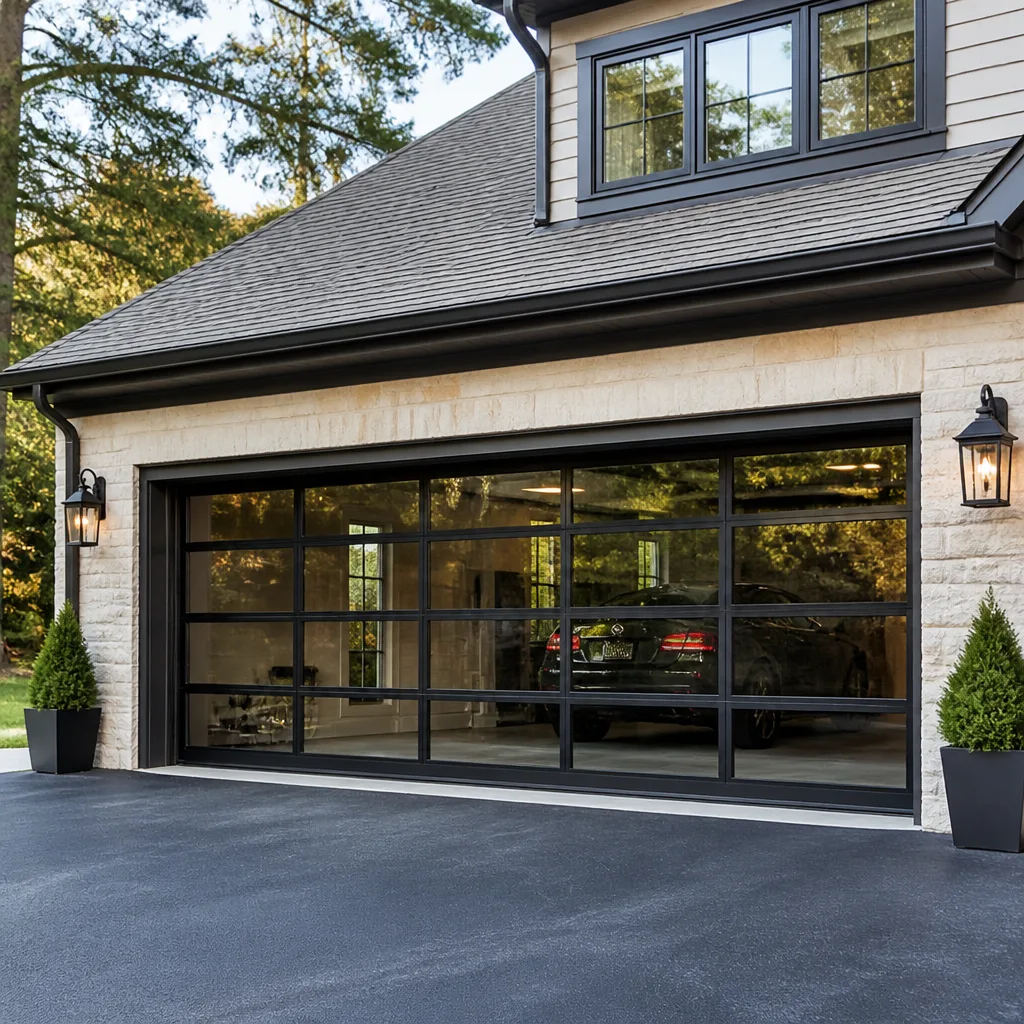 Full-view glass
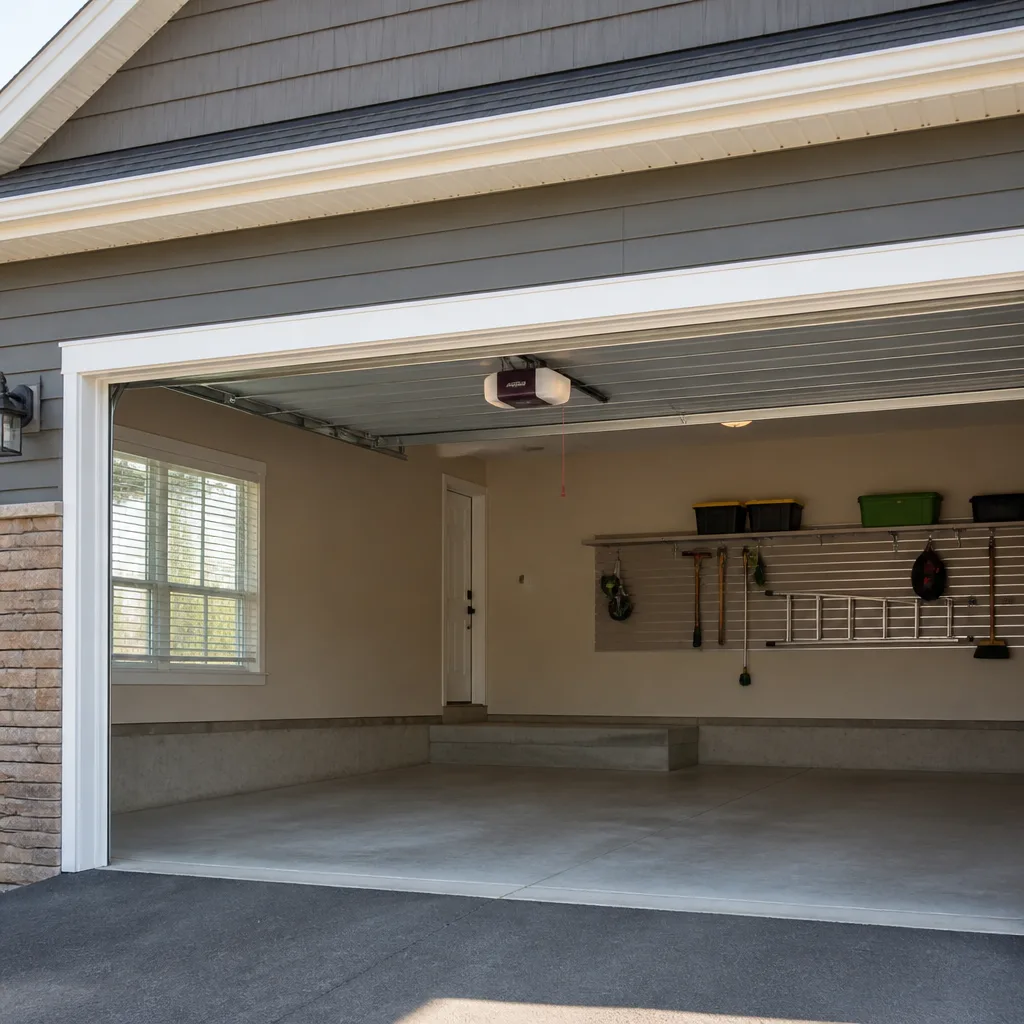 LiftMaster openers
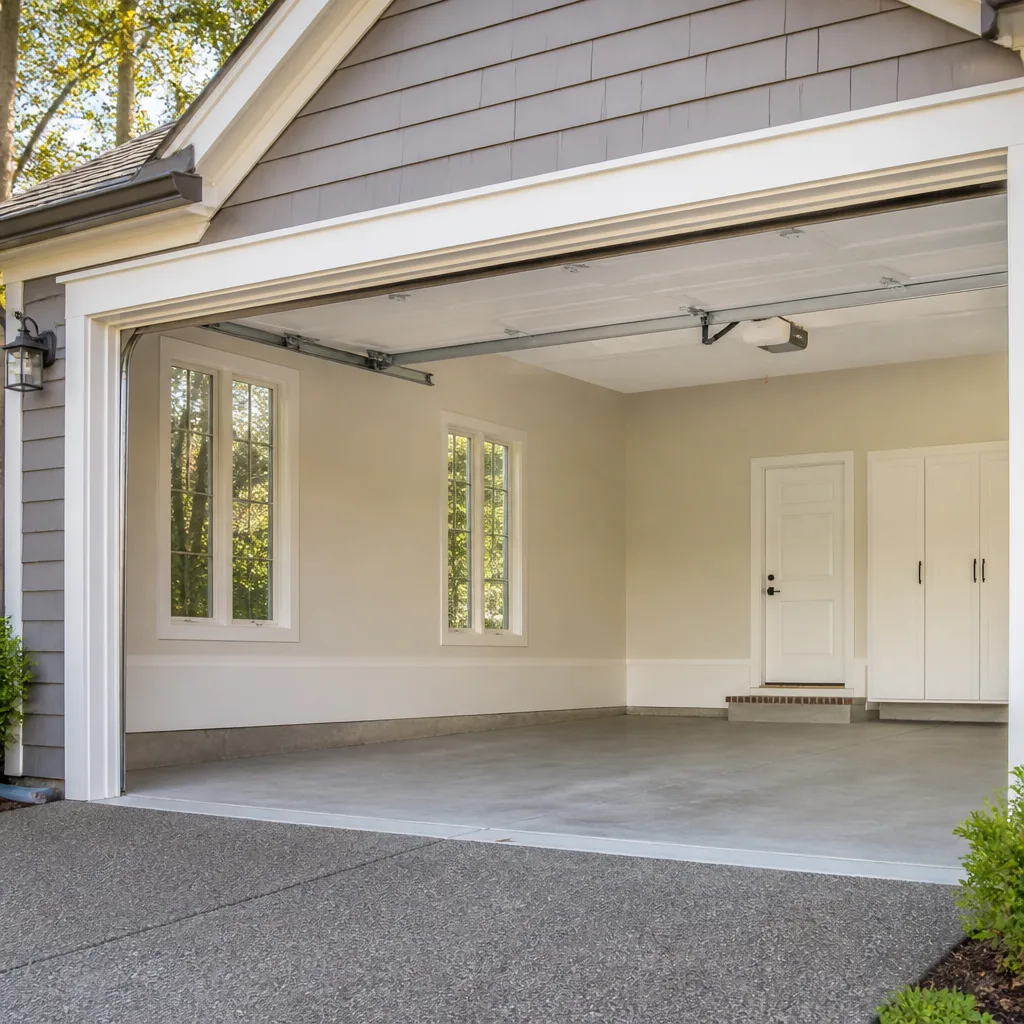 Chamberlain openers
Full 25-point door and opener safety check with every visit - springs, cables, rollers, tracks, and your LiftMaster or Chamberlain opener included
You get a price before we start. It does not change when the pro arrives.
Get your free estimateDIY vs Professional Garage Door: The Greater East Side Homeowner’s Decision Guide
A torsion spring stores roughly 100 foot-pounds of torque. When one breaks while someone is adjusting it without the right tools, it doesn’t just snap. It rotates at high speed, and anything in its path – a hand, a wrist, a face – takes the hit. That’s not a “consult a professional” disclaimer tacked onto the end of a product pitch. It’s physics, and it changes the whole DIY calculus for garage doors. Here in Greater East Side, where detached and attached garages alike take a beating from freeze-thaw winters and hot, humid summers, we get asked the same thing constantly: what can I safely do myself, and where’s the line? This guide draws that line precisely. About 20% of garage door work is genuinely DIY-appropriate. The other 80% is not. The divider isn’t skill level – it’s stored mechanical energy – and by the end you’ll know exactly which side you’re standing on.
Quick Answer
You can safely handle lubrication, safety sensor alignment, weather seal replacement, and remote reprogramming yourself. You should not touch torsion springs, extension springs, cables, or the bottom bracket – these store lethal energy and require specialized winding bars and training. Track realignment, panel replacement, and opener motor or logic board failures fall in a middle zone where a professional visit is usually cheaper than the damage a mistake causes. If you’re unsure which side a task falls on, call (866) 989-9389 and we’ll tell you honestly.
Styles & brands we work with
- Raised-panel steel
- Carriage house
- Modern flush
- Full-view glass
- LiftMaster openers
- Chamberlain openers
Table of Contents
- Why Stored Energy Is the Real Dividing Line
- The Genuinely DIY-Safe Tasks (With Actual Instructions)
- The Work You Should Never DIY on a Garage Door
- The Hidden Cost of DIY Mistakes in Greater East Side
- How to Use a Professional Visit Strategically
- The Gray Zone: Tasks That Depend on Your Comfort Level
- What Tools and Skill Level Actually Look Like
- Winter Reality in Greater East Side: What Fails First
Why Stored Energy Is the Real Dividing Line
Most DIY guides sort garage door tasks by difficulty. That’s the wrong axis. A weather seal is easy. A torsion spring is hard. But so is a panel swap, and one of those can kill you while the other just wastes an afternoon. The correct axis is stored energy.
A torsion spring on a standard residential door holds enough torque to lift the entire door – often 150 to 250 pounds of door weight balanced on a single shaft. That energy sits there, coiled, every hour of every day. When you wind or unwind it, you’re managing that force directly with a bar in your hand. Extension springs store the same energy stretched along the track, and when they fail they can launch hardware across the garage.
This is why the spring and cable work belongs to trained technicians, and it isn’t about liability language. It’s that the failure mode is violent and instant. There’s no warning creak. A spring that’s been fine for a decade can let go mid-adjustment.
Every other garage door task either involves zero stored energy or involves energy that’s already isolated and secure. That’s the clean split:
- Zero stored energy: lubrication, seals, sensors, remotes, visual inspection.
- Isolated but present energy: track adjustment, panel swaps – manageable only when the door is fully down and springs are at rest.
- Live stored energy: springs, cables, bottom brackets. Off-limits.
When we talk to homeowners across Greater East Side about garage door repair, this is the first thing we sort out. Not “can you afford it” – “which category is your problem in.”
The Genuinely DIY-Safe Tasks (With Actual Instructions)
Competent homeowners shouldn’t be talked out of work they can safely do. Four tasks fall clearly in the DIY zone, and here’s how each one actually goes.
1. Lubrication
- Close the door fully and disconnect the opener so the door is on manual.
- Wipe down the torsion spring, hinges, and rollers with a dry rag to remove old grease and grit.
- Spray a white lithium or silicone-based lubricant on the spring coils, hinge pivots, and roller bearings. Avoid the tracks themselves – lubricant there attracts dirt and causes the rollers to slide instead of roll.
- Work the door up and down a few times to distribute the lubricant.
- Reconnect the opener.
Twice a year is plenty. In Greater East Side, do it once in late fall before the cold sets in and once in spring after the grit of winter has worked into the moving parts.
2. Safety Sensor Alignment
If the door reverses for no reason, the photo-eye sensors at the bottom of the tracks are almost always the culprit. Look for a small LED on each sensor. Solid means aligned; blinking means it’s not seeing its partner. Wipe the lenses, check that nothing is blocking the beam, and gently nudge the bracket until both LEDs go solid. That’s it – no tools required beyond a soft cloth and your hands.
3. Weather Seal Replacement
The rubber or vinyl strip along the bottom of the door cracks and hardens with age. Pull the old one out of its aluminum retainer, cut a new seal to length, and push it in. Most seals slide in from the end. This is a genuine Greater East Side priority because a worn bottom seal lets cold air and snowmelt under the door all winter, and it’s the single most common cause of a drafty garage.
4. Remote and Keypad Reprogramming
Every major opener brand – LiftMaster, Chamberlain, Genie, Raynor – publishes the pairing steps for its models, and the process is a button press on the opener head plus a few presses on the remote. If you’ve replaced a remote or a neighbor’s signal is interfering, this is a five-minute fix you can absolutely do.
None of these four involve stored spring energy. All of them are safe with ordinary hand tools and a bit of patience.
The Work You Should Never DIY on a Garage Door
The tasks below are the 80% that belong to trained technicians, and the reason is the same for every one of them: live stored energy or a component under constant tension.
- Torsion spring replacement. The spring mounts on a shaft above the door with two winding bars. Winding it requires understanding turns, wire gauge, and door weight. Slip a bar and the spring unwinds in a fraction of a second.
- Extension spring replacement. Same stored energy, different geometry. These stretch along the horizontal tracks and hold the door under tension at all times.
- Cable replacement. Cables ride under hundreds of pounds of tension. A cable that lets go can whip across the garage.
- Bottom bracket removal. The bottom bracket is under constant cable tension. Anyone who tells you it’s safe to unbolt is wrong.
- Track replacement and major realignment. Bending a track back into place looks simple until the door binds and drops.
- Opener motor and logic board repair. This is electrical work inside a sealed unit. It’s not a screwdriver job.
- Panel replacement on a door that’s still spring-loaded. You have to unload the springs before you can safely swap a panel.
We get calls every winter from Greater East Side homeowners who tried a spring replacement after watching a video. What they describe afterward is always the same: the door was heavier than the video showed, the winding bars they bought didn’t fit the shaft, and they realized they were one slip away from a serious injury. That realization is the right instinct.
If you have a broken spring right now, don’t try to lift the door manually. Call for garage door repair Greater East Side and let the technician handle it.
The Hidden Cost of DIY Mistakes in Greater East Side
The argument for DIY is usually cost. Sometimes that math holds up. Often it doesn’t, and here’s why: garage door failures tend to cascade.
A track that’s slightly out of alignment doesn’t fail loudly. It rides hard, wears the rollers unevenly, and slowly pulls the top panel out of square. Over six months of daily use, a $150 service call avoided in April becomes a $400 panel replacement plus a track rebuild in October. The door looks fine until the day it doesn’t.
The same pattern shows up with springs. A homeowner who replaces a broken spring himself but guesses wrong on the wire gauge ends up with a door that’s not properly balanced. The opener then has to work harder than it should to lift it, and the opener motor or gear assembly fails months later. Two problems instead of one.
In Greater East Side, the climate amplifies every one of these. Our freeze-thaw cycles are hard on seals, hinges, and bearings. A door that runs rough in October runs much rough in February. Small alignment problems become binding problems once the temperature drops and steel contracts.
Here’s the honest cost picture:
- A voided opener warranty if you or a non-certified third party work on the unit. Most manufacturers void the warranty on opened units.
- A door that fails at 7 a.m. in January when you’re already running late – which is when emergency service costs the most.
- Structural damage from a door that comes off its tracks. Tracks are anchored into the framing; a door that binds and forces can pull the anchors.
- Replacement parts bought twice because the first set was the wrong spec.
None of this means DIY is always a mistake. It means the DIY decision should price the follow-on risk, not just the immediate fix.
How to Use a Professional Visit Strategically
The most efficient way to work with a garage door company isn’t to hand over everything. It’s to split the job along the energy line and keep the safe maintenance work for yourself. A professional visit is at its best when it’s doing exactly one thing: the high-risk work.
So here’s the pattern we recommend to homeowners throughout Greater East Side, without pressure:
- Have a technician do a full inspection and the dangerous work in one visit. Spring replacement, cable checks, opener diagnostics, track assessment – get it all handled at once. This is efficient because a technician is already there and can spot problems you can’t see.
- Ask them to show you what they’ve done and what to watch. A good technician will point out which components are aging and what the warning signs are.
- Take over the maintenance from that point on. Lubrication, seals, sensor cleaning, remote programming – all of that stays with you.
- Batch the minor items. Don’t call for every small issue individually; group the mid-zone tasks into the next regular visit.
The other strategic trick is to have the inspection done *before* something breaks. A door with no current symptoms still needs its springs and cables checked periodically, and catching a worn spring before it snaps means scheduling a repair call instead of an emergency one. That’s meaningful in Greater East Side, where a door that fails on a cold morning can leave you scrambling.
We handle this well because garage doors are all we do. When our technicians arrive to look at your opener, they’re also going to notice a cable that’s fraying or a hinge that’s wearing. That’s not upsell – it’s just what a specialist sees.
The Gray Zone: Tasks That Depend on Your Comfort Level
Between the clearly safe and the clearly dangerous sits a middle band. These tasks don’t involve live spring energy, but they can go wrong in ways that cost real money. Whether you take them on depends on your tools, your patience, and how much time you want to spend.
- Roller replacement. Swapping nylon rollers is straightforward when the door is down: unscrew the old roller, slide the new one in, retighten. Doable for most homeowners, but the door must be fully closed and springs at rest, and you need to inspect each bracket for wear.
- Hinge replacement. Similar to rollers. The hinges on a multi-panel door have to be matched by number and weight rating, or the door will bind.
- Minor track adjustment. A small vertical or horizontal tweak can fix a door that’s rubbing. Big adjustments need a spirit level and a second person, and if you’re not sure the door will stay on track, that’s the point to stop.
- Opener remote battery and light bulb. Yes, obviously. This is the easiest DIY task there is.
- Opener force and travel-limit adjustment. The opener itself has adjustment screws – usually the opener manual has the instructions. If the door doesn’t fully close and reverses, this may fix it. If it doesn’t, the problem is likely the sensors or the springs.
If you attempt a task in this band and it goes sideways – the door binds, a roller pops out, the track bends – stop and call for garage door opener repair rather than forcing the issue.
What Tools and Skill Level Actually Look Like
One of the honest things a good technician will tell you is where your skill level versus the job’s requirements actually stand. Here’s the plain breakdown.
Truly DIY-level
For lubrication, seals, sensors, remotes, and battery swaps, all you need is a screwdriver, a rag, some white lithium lubricant, and the owner’s manual. A competent homeowner with basic tools handles these with no difficulty. That means most adults.
Confident-DIYer level
Rollers, hinges, and opener adjustments call for a socket set, a wrench, a level, and some patience with the manual. You also need to be comfortable working on a door that’s partially raised or fully closed but still has springs attached. If you’ve ever replaced a bicycle chain or rebuilt furniture, you probably have the temperament for this. But you should also be comfortable stopping when something looks wrong.
Professional-only level
Springs, cables, bottom brackets, and track rebuilding need winding bars and specialized tools, plus an understanding of door weight and spring specs that only comes from working on hundreds of doors. Our technicians have up to 15 years of experience handling exactly these components, and they still treat every spring like it’s live.
So the honest skill threshold isn’t “handy person or not.” It’s “do I have the right tools and do I know when to stop.” If you have both, four or five tasks are safely yours. If you don’t have the right tools for the professional-tier jobs, no amount of skill makes them safe.
Winter Reality in Greater East Side: What Fails First
Every region has a garage door failure pattern. In Greater East Side, it’s shaped by the same forces that make our winters long and cold. Below-freezing nights, freeze-thaw ground movement, and a lot of moisture cycling through the garage.
The failure sequence we see most often runs like this:
- Bottom seal cracks and lets air and moisture under the door. Left alone, this becomes a frozen puddle at the threshold and a door that sticks.
- Hinges and rollers dry out and stiffen because the cold drives lubricant out of the pivot points. This adds stress to the opener.
- Springs weaken with repeated thermal cycles. A spring that lifted the door easily in summer may leave it heavy by deep winter.
- The opener gives out first, because it’s been compensating for everything else.
Homeowners across Greater East Side can prevent most of this by doing the DIY maintenance at the right moment: lubricate and inspect the seals in late fall, before the cold locks everything in place. Addressing a worn seal in October is a five-minute job. Addressing it in January after it’s frozen to the concrete is a different story.
It also pays to remember the door’s opener is doing real work every day across a wide temperature range. A door that runs smoothly in July but struggles in January is telling you something’s out of balance. That’s the moment to have a technician look at the springs and cables – not because they’re failing, but because a slight loss of tension compounds in cold weather.
When a door does fail in the thick of winter, emergency service isn’t an upcharge surprise – it’s part of what we’re set up for. If your garage door won’t move and it’s below freezing, call (866) 989-9389.
Common Mistakes to Avoid
- Trying a spring replacement before watching the door’s weight. Every video shows a door that lifts smoothly. Before you buy any tools, lift the door by hand with the opener disconnected and feel how much effort it takes. If it’s heavy enough to surprise you, don’t attempt it.
- Lubricating the tracks. The most common DIY misstep. Greased tracks make rollers slide instead of roll, and a sliding roller is one that jumps. Clean the tracks with a rag and leave them dry.
- Ignoring a door that runs rough. A rough, rattling, binding door is telling you something’s out of adjustment. In Greater East Side, a rough door in fall will be a broken door by February.
- Replacing one roller out of a set. Rollers wear as a group. Replace them in sets of four or six, or you’ll chase alignment problems for months.
- Adjusting opener force limits to fix a heavy door. If you turn up the force to lift a heavy door, you’re putting more strain on the opener motor and masking a spring problem that’s getting worse.
- Buying a weather seal without measuring the retainer. Seals come in specific retainer-style profiles. A seal that doesn’t slide into the existing retainer is a return trip to the hardware store.
- Assuming brand-new equipment means no maintenance. A new door is a fresh start, but it still needs seasonal lubrication and an annual visual check. New doors aren’t maintenance-free, and the garage door installation work should always end with a walkthrough of what to watch.
See the difference
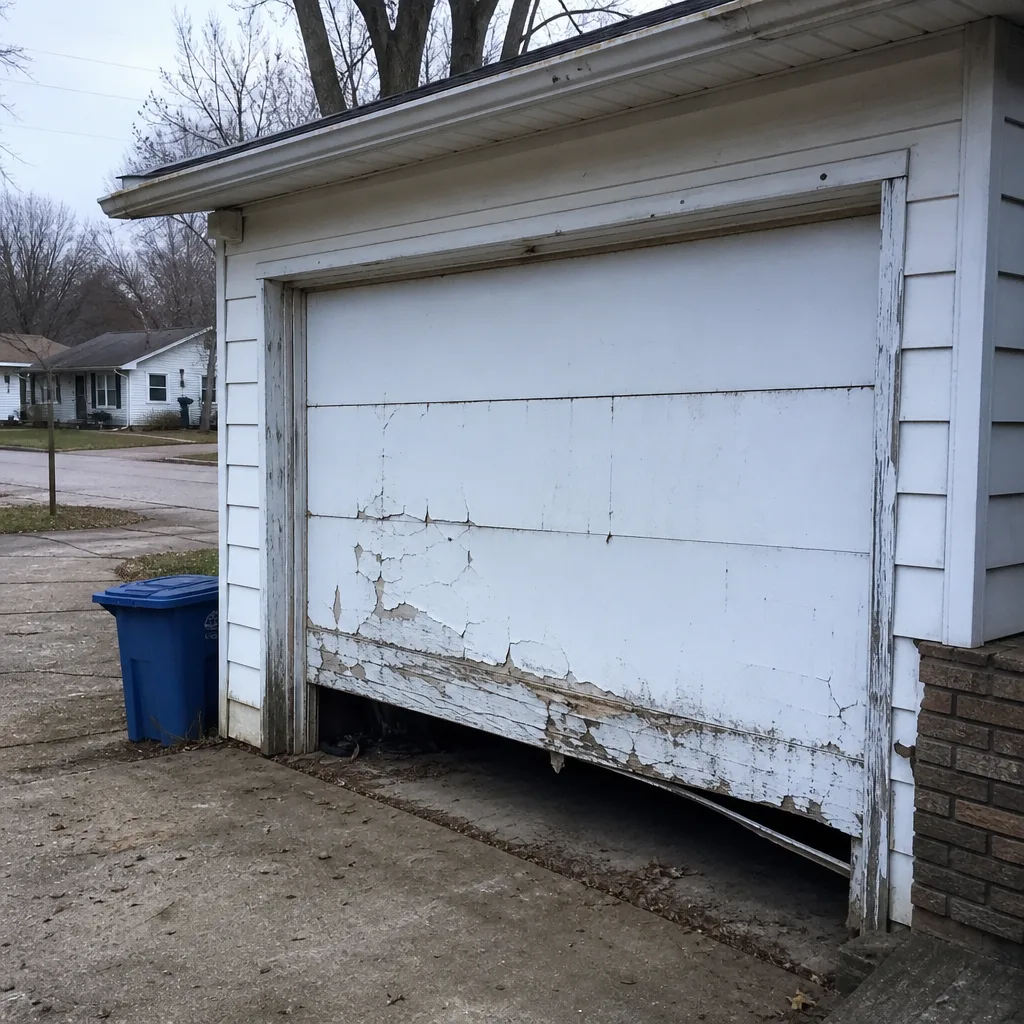 Before
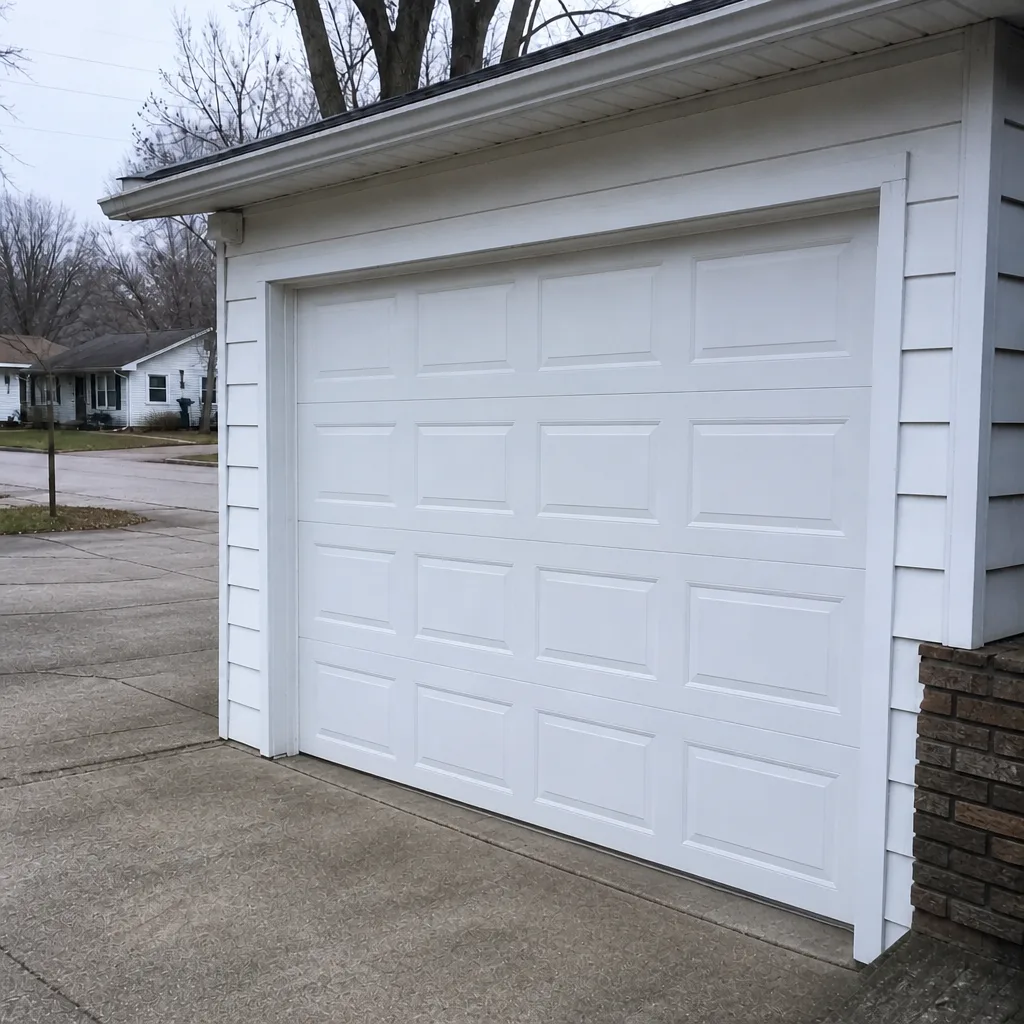 After
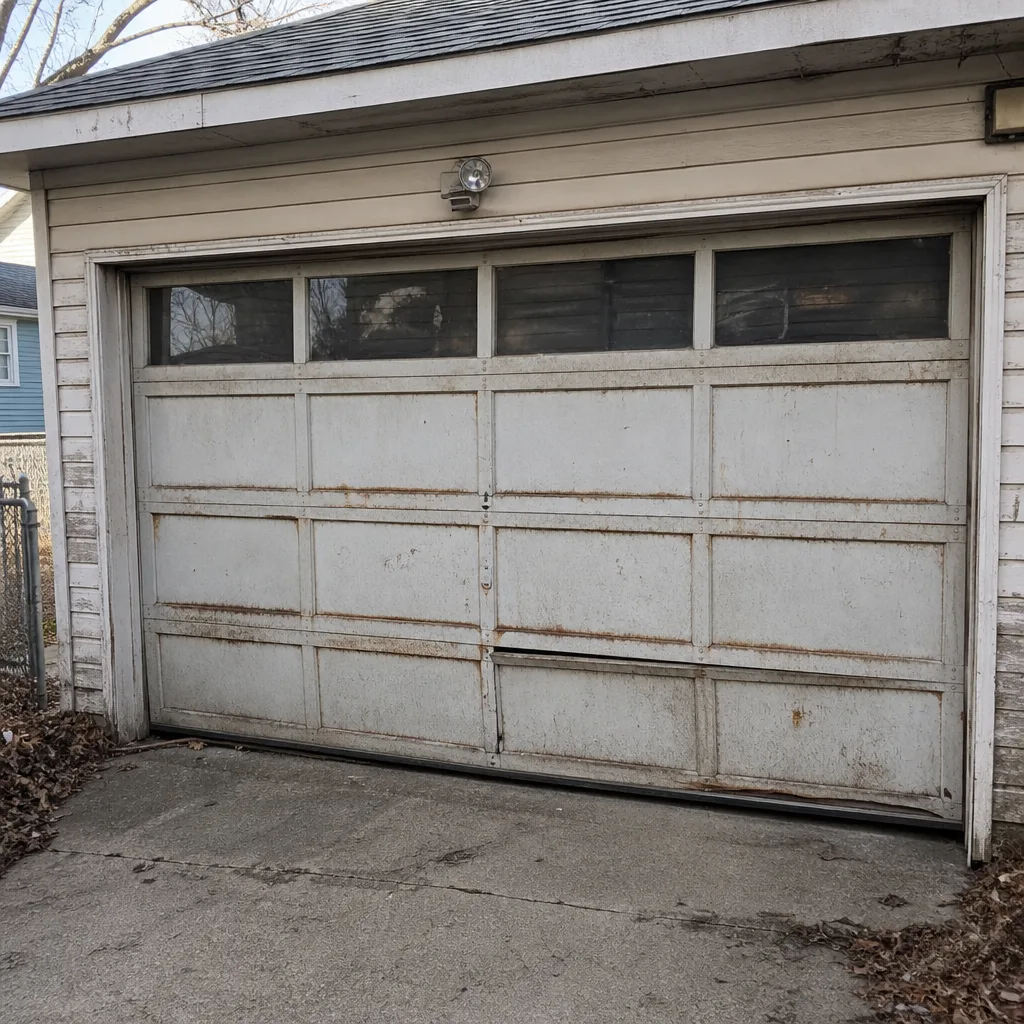 Before
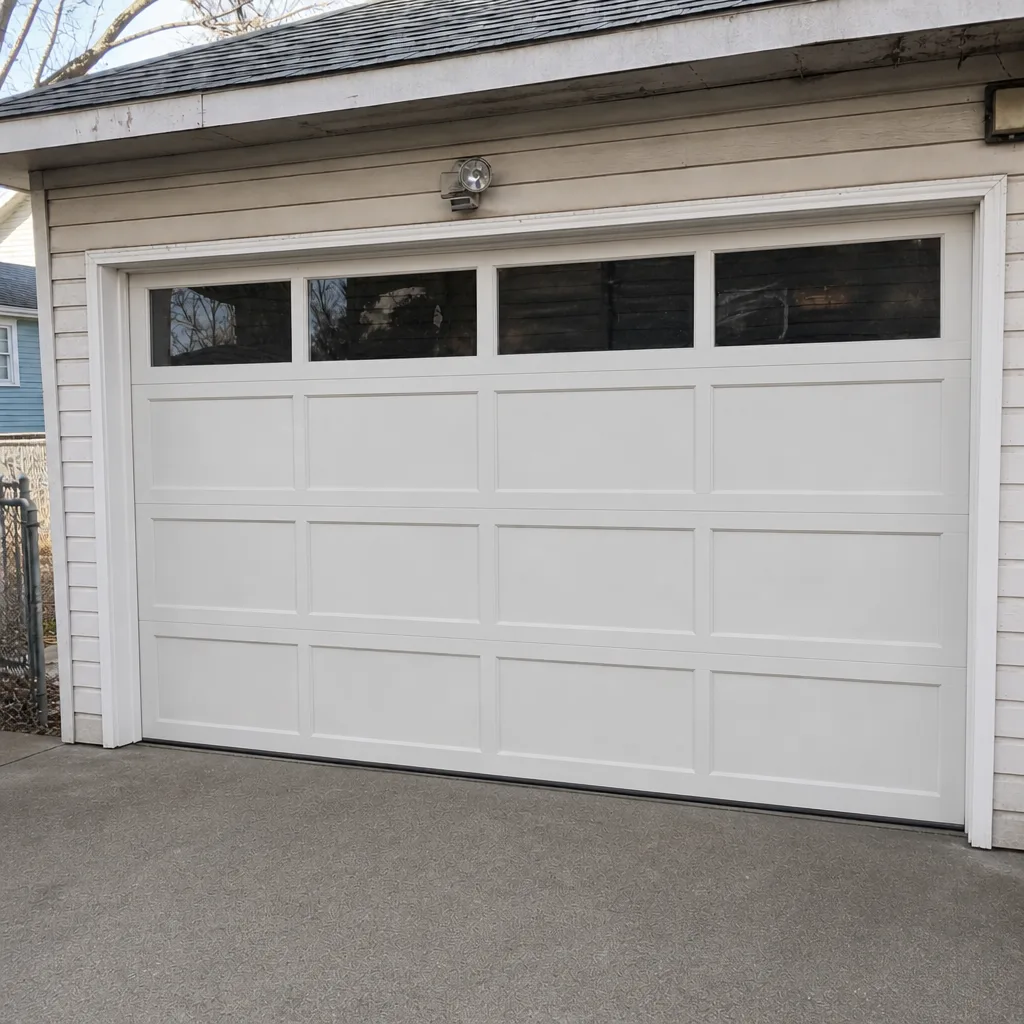 After
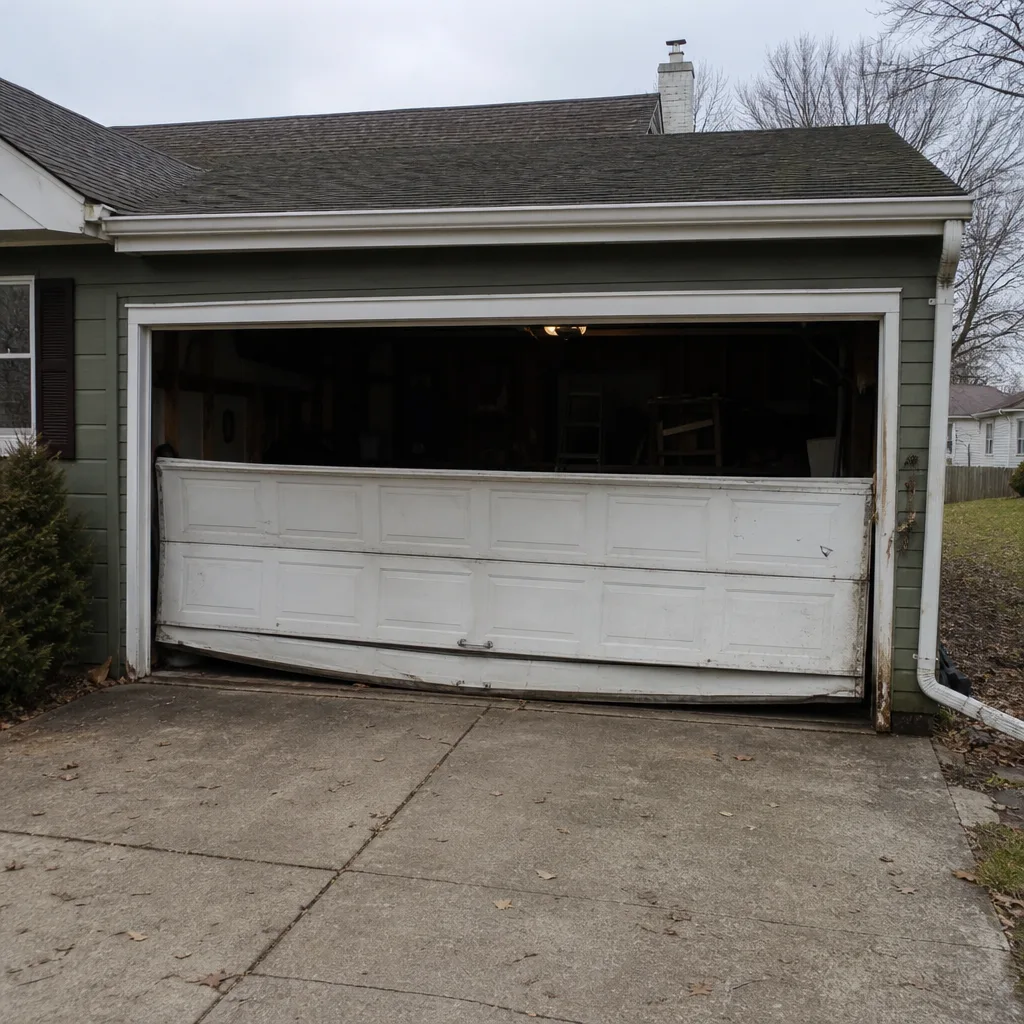 Before
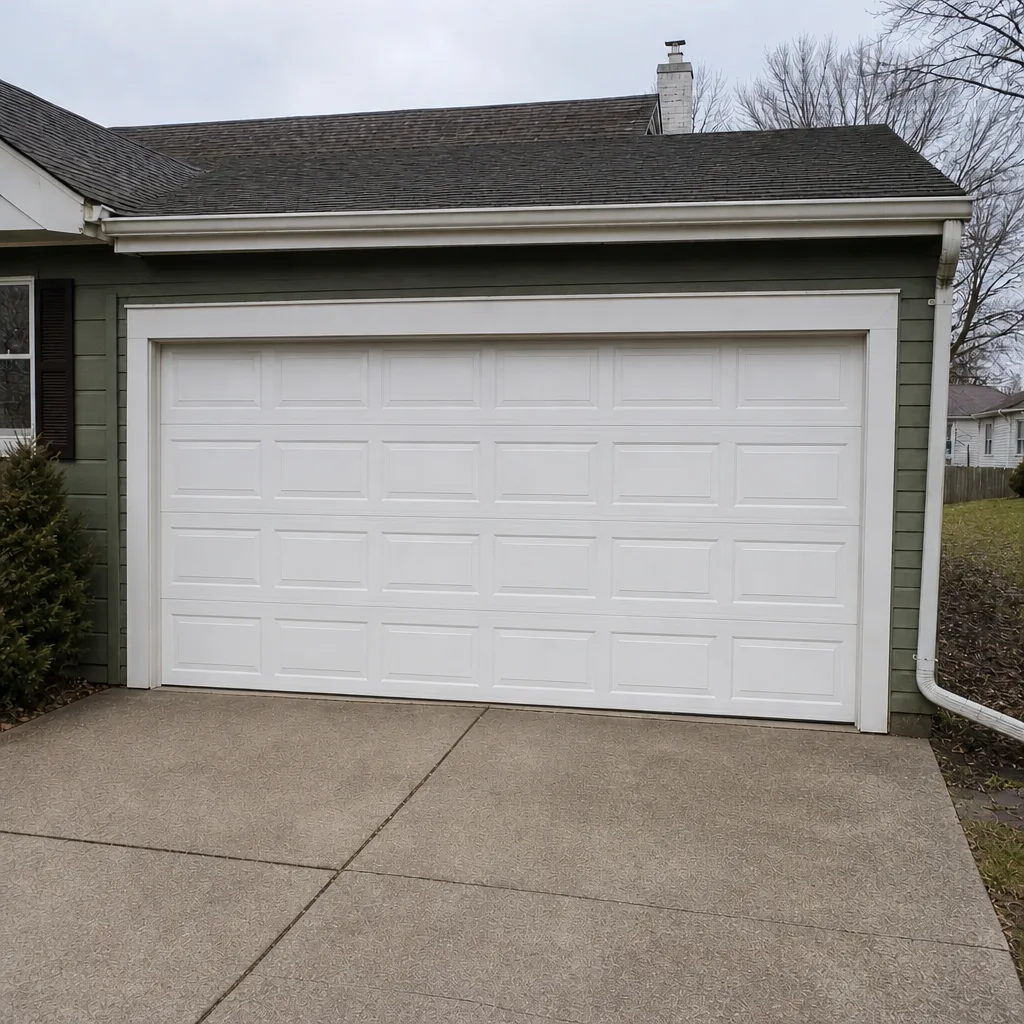 After
When to Call a Professional
Call a professional any time a spring or cable is involved, and call right away if the door is stuck open, stuck closed, or making sounds that suggest something has let go. Call if a track is bent or the door is off on one side. Call if the opener runs but the door doesn’t move, or the door reverses without warning and the sensor lights are solid. Call if you’ve attempted a gray-zone task and it didn’t go right the first time – don’t retry it. And call if you’re simply not sure which category your problem falls in – a two-minute phone call settles that quickly. Garage Door Repair Greater East Side offers free estimates in Greater East Side – call (866) 989-9389.
Frequently Asked Questions
No. A torsion or extension spring holds enough stored energy to cause serious injury, and the failure happens in a fraction of a second. Spring work requires winding bars and training, and it’s the single most dangerous task on a garage door. Call (866) 989-9389 and we’ll handle it safely – estimates are free.
Most spring replacements land in the low hundreds of dollars for a single spring; a matched pair that’s replaced together typically costs about twice the single-spring figure. The written estimate sets the final price, quoted and agreed before any work starts. Call (866) 989-9389 for an exact quote – estimates are free.
No. Once the estimate is written and agreed to, that’s the price. If a technician finds something genuinely different – a damaged cable, a bent track – you’ll be told before any additional work begins, and nothing gets done without your approval. The written estimate is the number.
Lubrication, weather seal replacement, safety sensor alignment, and remote or keypad reprogramming are all safe for most homeowners. These involve no stored spring energy and require only basic tools. Twice-a-year lubrication and a fall seal check handle the vast majority of the wear in this climate.
Yes, we offer emergency service and same-day repair for stuck doors and broken springs. When your door won’t move, you don’t have time to wait, so emergency service is part of the standard offer here rather than an add-on. Call (866) 989-9389 and we’ll get you booked.
The local professionals we connect you with are licensed and insured as their state requires, and our technicians have up to 15 years of experience on garage door systems. We work on nearly every major brand, so there’s no runaround about compatibility. Call (866) 989-9389 for a free estimate.
Where We Fit In
Everything above is the honest line, and we hold to it whether or not it leads to a service call. The point of a specialist isn’t to talk you out of doing anything yourself – it’s to make sure the work you can’t safely do gets done right the first time. That’s where we come in. Springs, cables, openers, tracks, panels, full replacements: one call covers it. We handle LiftMaster, Chamberlain, Genie, and Raynor systems without brand-matching delays, and we can work with your insurer if a repair turns into an insurance matter. We don’t quote one price over the phone and another after the fact. The number on the estimate is the number.
For doors that are genuinely failing – not just due for maintenance – same-day and emergency repair are the reason we’re set up the way we are. Our technicians have up to 15 years of experience with high-tension components, and they treat every spring like it’s live. That’s the standard, and it’s why we tell homeowners on both sides of the DIY line: know your limit, and call when you reach it.
The Bottom Line
The DIY vs professional decision for garage doors isn’t about how handy you are. It’s about stored energy. About 20% of garage door work – lubrication, seals, sensors, remotes – is safely yours, and there’s no reason to pay someone else to do it. The other 80% involves springs, cables, or electrical components that fail violently or fail expensively, and that belongs to trained technicians. In Greater East Side, the winter climate means a small alignment issue in October becomes an emergency in February, so seasonal maintenance and honest self-assessment matter more here than in most places. Do the safe maintenance, book the professional work, and when a door fails, call (866) 989-9389 for a free estimate. We’ll tell you straight what’s needed.
Written by the team at Garage Door Repair Greater East Side.