Last updated November 21, 2026
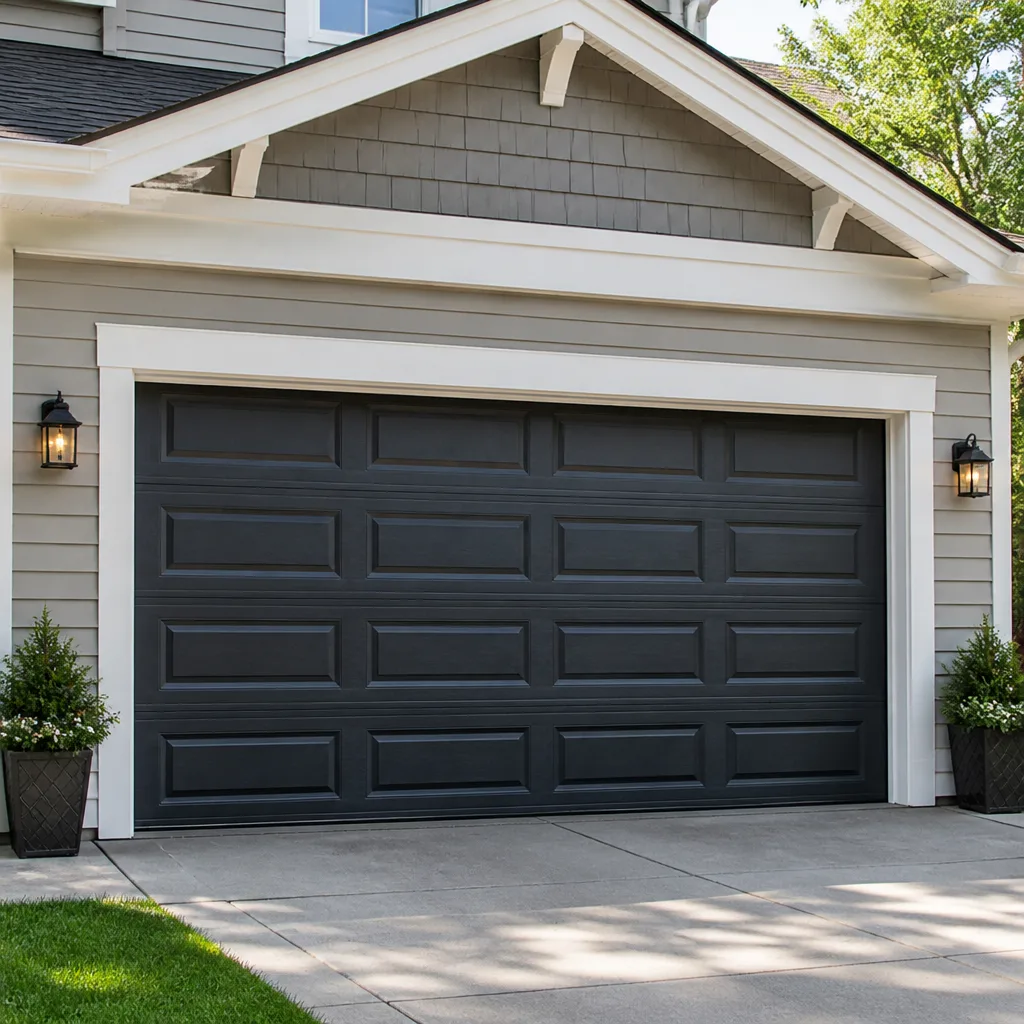 Raised-panel steel
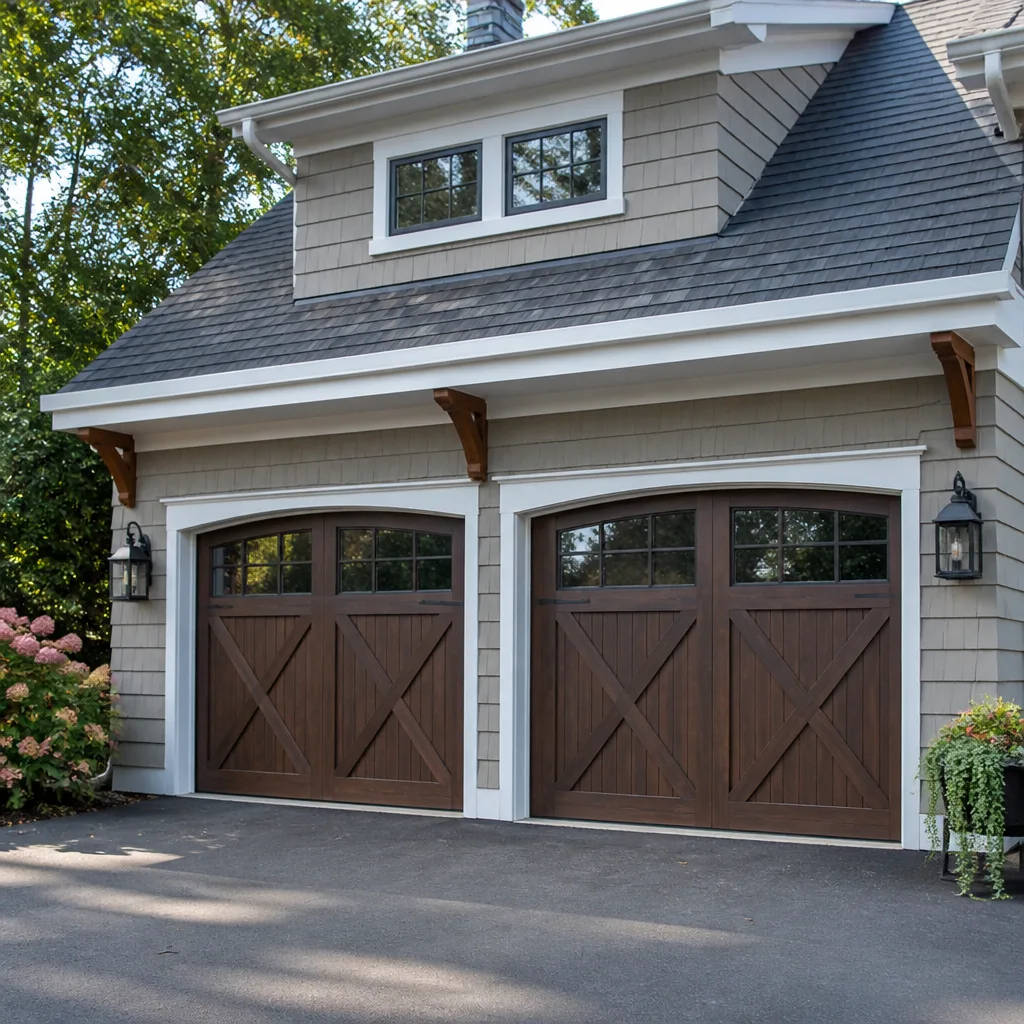 Carriage house
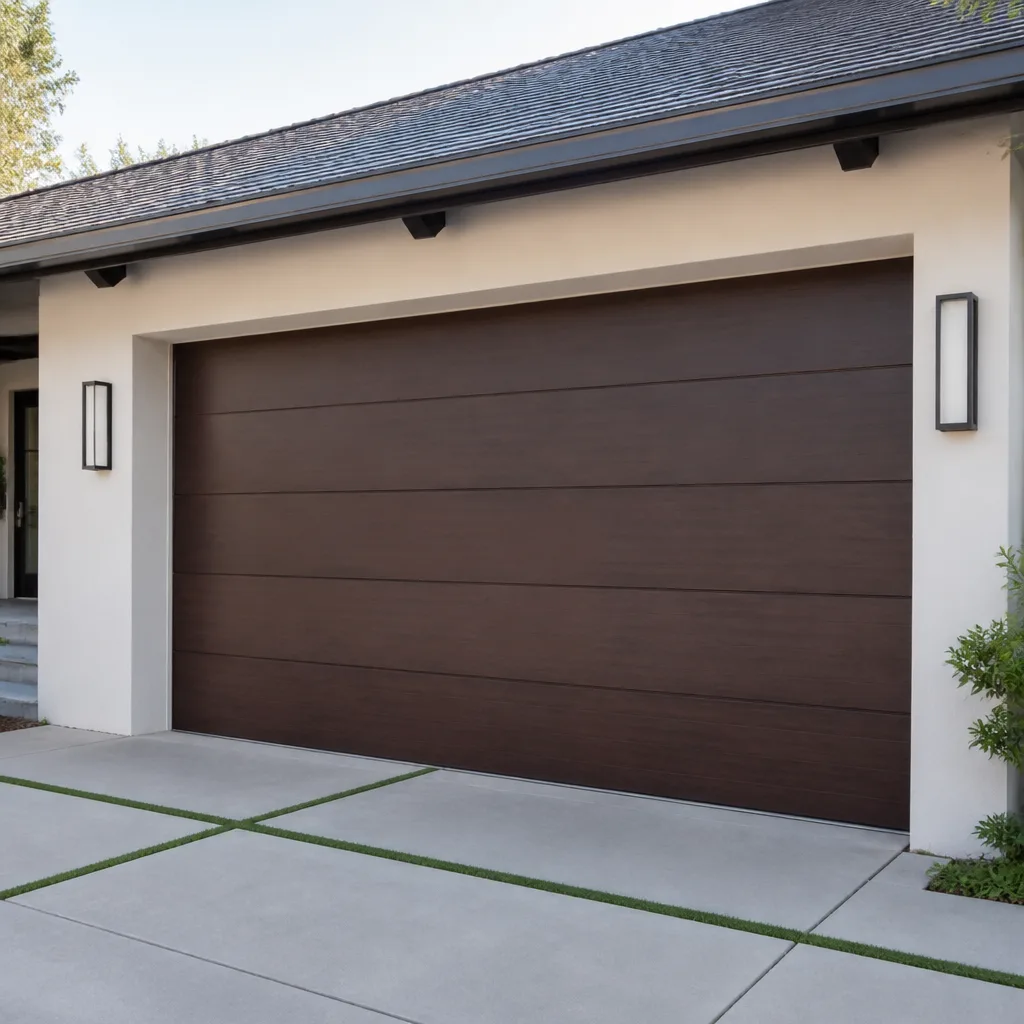 Modern flush
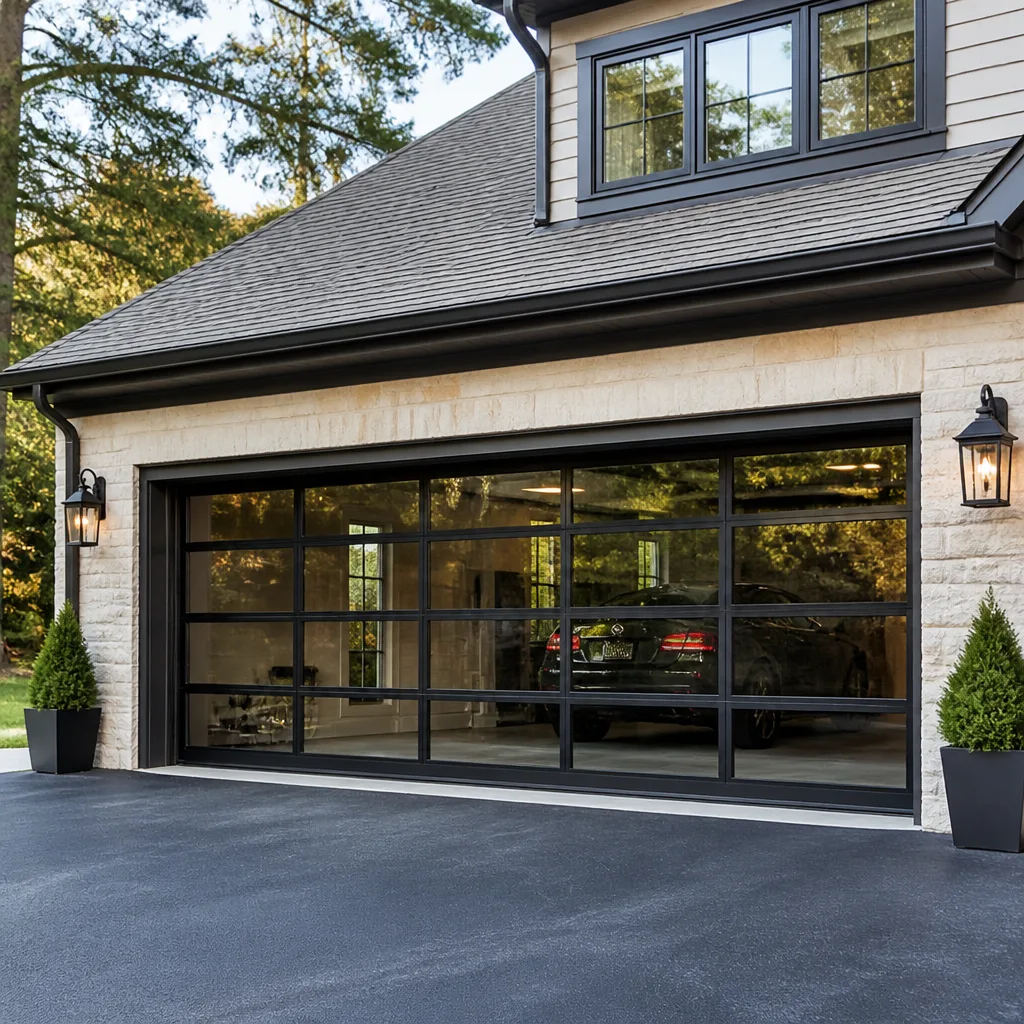 Full-view glass
 LiftMaster openers
 Chamberlain openers
Full 25-point door and opener safety check with every visit - springs, cables, rollers, tracks, and your LiftMaster or Chamberlain opener included
You get a price before we start. It does not change when the pro arrives.
Get your free estimateThe Complete Guide to Garage Doors in Greater East Side
Most garage door guides are written for a suburb in Arizona. Greater East Side gets minus-20 windchills, alley-facing garages, and homes built before automatic openers existed – none of that shows up in the advice you’ve been reading. The standard playbook (buy the cheapest steel door, lubricate once a year, call a national chain) was built for a climate that never freezes and housing stock that’s half a century newer than what you’re working with.
This guide starts where you actually live. We’ll cover which materials survive Minnesota’s freeze-thaw cycles, what single-car alley garages need that two-car suburban doors don’t, how to pick a company when you’ve got a handful of real options rather than dozens, and what a realistic timeline and budget look like in Greater East Side.
Quick Answer
A garage door in Greater East Side should be steel or insulated steel if you want the most reliable performance per dollar through Minnesota winters, and any repair involving springs, cables, or panels is worth calling a specialist for rather than a handyman. Expect spring repair and opener fixes to be scheduled quickly, while full replacement runs on a longer timeline because doors are measured, ordered, and installed rather than pulled from stock. The written estimate you agree to before work starts is the price you pay.
Styles & brands we work with
- Raised-panel steel
- Carriage house
- Modern flush
- Full-view glass
- LiftMaster openers
- Chamberlain openers
Table of Contents
- How Greater East Side’s Climate Changes What You Should Buy
- The Housing Stock You’re Actually Working With
- Which Door Materials Hold Up Against Minnesota Winters
- Repair or Replace? A Framework for Older Doors
- How to Choose a Garage Door Company in Greater East Side
- What Garage Door Work Typically Costs in Greater East Side
- Realistic Timelines for Repair and Installation
- A Season-by-Season Maintenance Game Plan
How Greater East Side’s Climate Changes What You Should Buy
Freeze-thaw cycles are the single biggest factor in garage door longevity around Greater East Side, and they’re the factor national buying guides ignore completely. A garage door here goes through dozens of freeze-thaw swings each winter. Moisture works into seams, wood swells and shrinks, steel contracts at a different rate than its frame, and hardware that was torqued in October is loose by March. Over several seasons, that motion is what breaks springs early, warps wood panels, and pulls hinges out of alignment.
Road salt is the second factor. Any door that faces an alley or a street where plow trucks turn gets salt spray on its bottom section and bottom brackets. Salt doesn’t ruin a modern factory-finished steel door quickly, but it does attack fasteners, bottom seals, and any bare steel or unsealed wood edge. Homeowners who replace a door here and skip the bottom seal or leave a raw edge unpainted find out within a couple of winters.
What that means for your buying decision:
- Insulation matters more here than in mild climates. An insulated door keeps the garage from swinging between freezing and thawing as sharply, which is easier on the door and much easier on anything stored inside.
- Hardware quality separates a door that lasts from a door that needs service every spring. Cheap hinges and thin bottom brackets are the first things to fail in a cold-climate cycle.
- Sealing at the bottom and sides is not cosmetic. It’s what keeps water and salt off the parts that fail first.
- Wood needs more attention than steel or composite in this climate, because every wet-dry cycle is a chance for panels to move.
If you’re already dealing with a door that fought through several winters and lost, we can look at whether it’s worth fixing. Our Garage Door Repair Greater East Side page lays out the service lineup and what each visit covers.
The Housing Stock You’re Actually Working With
Greater East Side housing stock is where generic garage door advice falls apart fastest. A huge share of homes here have single-car garages, many are detached, and a lot of them are accessed from an alley rather than a driveway. That changes everything about how a garage door job runs, from how wide the door is to how much clearance a technician has to work with.
Here’s how the common configurations differ in practice:
- Single-car detached garage, alley access. Narrow doors with tight side clearance. Access from an alley means the truck parks where it can, often farther from the door than at a front-facing driveway. Installation of a wider replacement door may need reframing, which gets quoted separately.
- Single-car attached garage. Usually the simplest job. The door size is standard enough that measuring is quick, and the mechanical space above is accessible.
- Detached garage with no power or a tired opener. Common in older East Side homes. Sometimes the opener was added years after the house was built and the wiring was never tidy. We see this often enough that we plan for it on every service call rather than treating it as a surprise.
- Two-car garages on newer construction. Less common in Greater East Side’s older blocks, but where they exist the work is more standard and the timeline is more predictable.
The practical takeaway: when you call about a Greater East Side garage, expect us to ask whether the garage is attached or detached and whether it faces an alley before we quote. Those two answers change the labor estimate more than anything else on this side of town.
Which Door Materials Hold Up Against Minnesota Winters
Steel and insulated steel win on cost and durability in this climate, wood composite is the upgrade if you want a specific look and don’t mind the price, and bare wood is a maintenance commitment rather than a one-time purchase. That’s the short answer. The longer answer is about how each material behaves under freeze-thaw and road salt over the years you’ll own it.
Steel (including insulated steel): The default for a reason. Factory finishes on modern steel doors resist salt spray well, and steel doesn’t swell or shrink with moisture the way wood does. The weak points are fasteners, bottom seals, and any spot where the finish gets chipped. Keep those addressed and a steel door holds up through many Minnesota winters. Insulated versions add a layer between you and the cold and keep the door quieter.
Wood composite: Composite panels give you the look of wood without the seasonal movement of real wood. They cost more than steel, but if you want a period-appropriate look on an older Greater East Side home, composite is the version that survives the climate instead of fighting it. Brands like Clopay and Amarr make composite lines worth comparing, and Raynor builds wood-look options that fit the older streetscapes here.
Bare or stained wood: The honest answer is that real wood needs refinishing on a schedule in this climate. If the door is original to an older house and you’re attached to it, plan on the maintenance. If you’re replacing, know that you’re buying a recurring task, not a finished product.
Whichever you pick, the opener and door need to match. We service systems from LiftMaster and Chamberlain among others, so once the door is chosen the opener side of the job is already covered. If your opener is the weak link, our garage door opener repair service handles that separately from door replacement.
Repair or Replace? A Framework for Older Doors
Repair is usually the right call if the door’s panels, tracks, and framing are sound and only the mechanical parts have failed. Replace when the door itself is compromised – bent panels, rusted-through bottom sections, tracks that won’t stay aligned, or a door so heavy the opener is straining. Age alone isn’t the deciding factor; condition is.
Here’s the checklist we walk through on a Greater East Side service call:
- Are the panels straight and rust-free? Bent or rusted-through panels can’t be repaired convincingly. That pushes you toward replacement.
- Is the frame and opening sound? A warped or rotting frame means the door won’t seal, and a new door won’t fix a bad frame.
- Do the tracks stay aligned? If you’ve had tracks straightened twice in a few years, the door’s weight and balance are the problem, not the tracks.
- Is the opener struggling? An opener that’s fighting a heavy or unbalanced door will keep failing. Either the door gets fixed or the opener gets replaced – sometimes both.
- How often are you calling? Two or more service calls a year on the same door usually means the repair math has flipped.
For doors on their way out, a full replacement with correct sealing and hardware is the cleaner long-term answer in this climate. Our garage door installation service covers measuring, door selection, and the install itself as a single scheduled job.
How to Choose a Garage Door Company in Greater East Side
Greater East Side isn’t a suburb with dozens of garage door companies competing on every block, so the usual “get five quotes and pick the middle one” advice doesn’t hold. What matters more here is knowing which companies actually do garage doors as their trade, which handle the older housing stock you’ve got, and which will be reachable when something fails at a bad time.
These are the questions worth asking before you book anyone:
- Do they do garage doors exclusively, or is this one service among many? A specialist hears “single-car alley garage, attached, 1950s” and knows what to check. A generalist hears it and schedules an hour.
- Which brands can they actually service? Matching the brand on your opener or door to the company you call saves days. We service systems from LiftMaster, Chamberlain, Genie, Clopay, Amarr, Wayne Dalton, Craftsman, and Raynor without the runaround on compatibility.
- Do they handle both repair and installation? A repair-only company sends you elsewhere for the replacement quote, and an installer usually isn’t who you want at 9pm when a spring snaps.
- What’s the emergency process? Ask directly. A company that treats emergency calls as a core service answers the question differently than one that treats it as an upsell.
- Will the price be quoted in writing before work starts? Any company that won’t commit to a written estimate before the job starts is one to pass on.
Our own team works on every major brand we’ve named, and our technicians have up to 15 years of experience, so the compatibility and housing-stock questions get answered on the first call. The garage door repair service covers the full repair side, and free estimates are available in Greater East Side.
What Garage Door Work Typically Costs in Greater East Side
Spring repair and opener repair are the jobs most Greater East Side homeowners call about, and those are the fastest to price because the parts and labor are well understood. Full door replacement is a longer conversation because the door itself is ordered, so the range depends heavily on material, size, and whether the frame and tracks need attention. The typical ranges below are estimates – the written quote you agree to before work starts is the final price.
| Service | Typical estimated range | Notes |
|---|---|---|
| Single-spring repair | $180 – $340 | For one spring. A matched pair is usually replaced together, so a pair is roughly twice the single-spring price. |
| Opener repair | $150 – $350 | Depends on the fault – motor, gear, logic board, or safety sensors. |
| Panel replacement (single panel) | $250 – $550 | Panel matching to the existing door affects the price. |
| Cable or roller replacement | $150 – $300 | Often bundled with a spring job when the hardware shows wear. |
| New steel door, single-car, installed | $900 – $1,800 | Door size and insulation level move the range. |
| New insulated steel door, two-car, installed | $1,600 – $3,200 | Insulation and hardware quality drive the top end. |
| Wood composite door, installed | $2,000 – $4,000+ | Custom sizing and finish push this higher. |
Two things worth knowing about the ranges. First, alley-access detached garages in Greater East Side can add labor time to any job because access to the door is tighter. Second, if the door frame itself needs work, that’s quoted separately from the door or repair. Both are the kind of thing that shows up in the written estimate, not in a surprise on the invoice. If you want an exact number for your door, call us and we’ll get you a free estimate.
Realistic Timelines for Repair and Installation
Repairs are usually the fastest path back to a working door; installation runs on a longer, scheduled timeline because the door is measured and ordered before anyone shows up with tools. That’s the short version. The longer version is what actually drives the schedule in Greater East Side, where the housing stock and climate set the pace.
Repair timelines:
- Spring and opener failures. These are the most common calls, and they get booked on the fastest schedule. Emergency service is a core part of what we do, so when a door fails outside normal hours the call still goes through.
- Panel and hardware jobs. Usually scheduled within a few days, depending on whether a matching panel has to be ordered.
- Tracking and alignment issues. Often resolved on the first visit, sometimes with a follow-up if the frame is involved.
Installation timelines:
- Measure and quote. The first step is a measure of the opening and a written quote. No door gets ordered before this.
- Door order. Stock sizes come faster; custom or non-standard sizes take longer, and older Greater East Side openings fall into the second group more often than new construction does.
- Install day. The old door comes out, the new one goes in, and the opener is checked against the new door’s weight and balance.
Installation work is measured, ordered, and scheduled – it’s a different pace than a repair call, and we quote it that way. If your door is still in repairable condition, it’s worth a look before you commit to a full replacement. Call (866) 989-9389 and we’ll walk through both options with you.
A Season-by-Season Maintenance Game Plan
A little seasonal attention is the difference between a door that quietly works for years and one that surprises you every spring. You don’t need to do much, and none of it involves touching the springs or cables – those are high-tension parts, and they’re the one thing to leave to a trained technician. What’s left is the low-risk, high-payoff list.
Before winter sets in:
- Wash the door bottom section and bottom brackets to knock back road salt and grit.
- Check the bottom seal for cracks or gaps; replace it if it’s pulling away from the door.
- Look at the finish on the door edges and touch up any chipped paint or finish.
- Test the safety reverse with a small object on the floor and confirm the opener’s sensors are aligned.
Through the winter:
- Listen for new sounds – grinding, popping, or a motor that runs harder than usual. Those are early warning signs, and they’re cheaper to fix early.
- Keep the tracks clear of snow and ice buildup at the threshold, without using force to clear it.
In spring, once the thaw hits:
- Walk the perimeter of the door and look for gaps that opened over the winter.
- Have the springs and cables inspected by a technician. This is the part that isn’t a DIY job.
- Check the hardware and hinges for looseness after the seasonal swing.
A cheap annual habit of a quick look and a service call when something sounds wrong goes a long way in this climate. It’s also the best defense against a spring that lets go in the middle of a January cold snap.
Common Mistakes to Avoid
- Buying on price alone without checking the hardware. A cheap door with thin hinges and light brackets is the first thing to fail in a freeze-thaw cycle. The savings disappear in a couple of winters.
- Skipping the bottom seal on the install. In Greater East Side, the bottom of the door takes the most salt and moisture. A door installed without a proper seal is a door that starts rusting at the bottom section within a few seasons.
- Calling a general handyman for a spring or cable job. Springs and cables are under high tension and can cause serious injury. This is the one job that should always go to a specialist with the right training and tools.
- Replacing the opener to fix a heavy door. If the door is out of balance, a new opener will wear out fast. The door gets fixed first, or the new opener inherits the problem.
- Assuming a standard-size door will drop in. Older East Side garages, especially single-car detached ones, often have openings that don’t match stock sizes. Measuring first avoids the two-step install and the angry phone call.
- Waiting on a door that’s clearly failing. A door that’s bent, rusted through at the bottom, or fighting its opener every morning costs more to fix later than it does to address early.
- Thinking the cheapest quote is the honest one. A quote you can compare line by line, with the price agreed before work starts, is worth more than the lowest number on the page.
See the difference
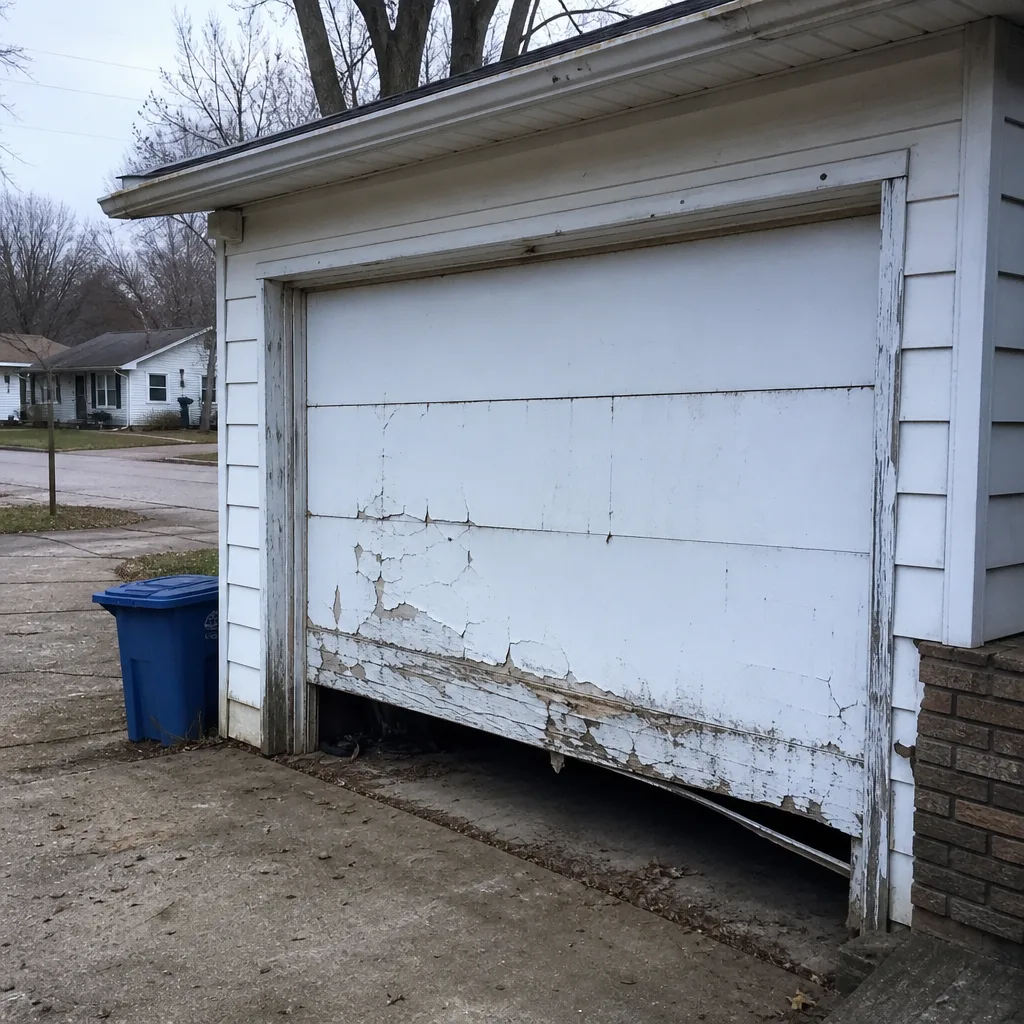 Before
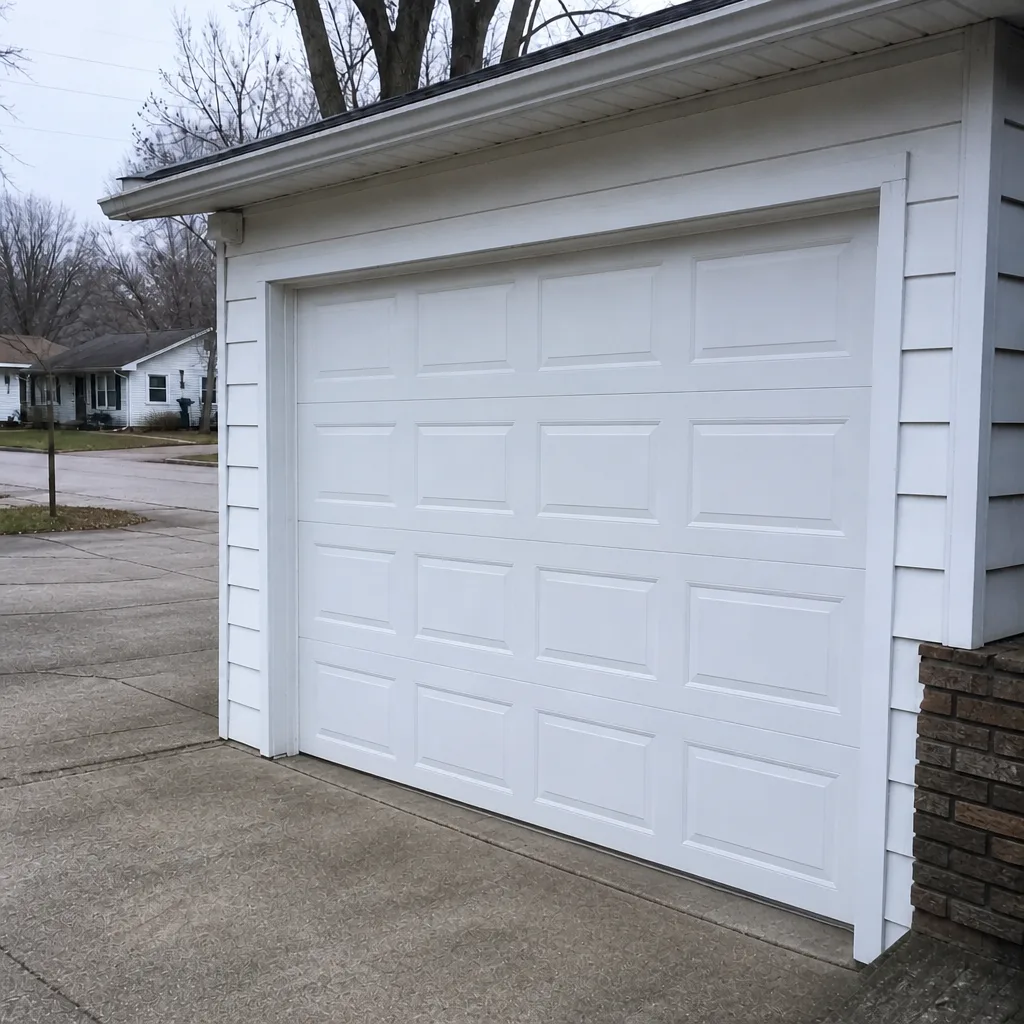 After
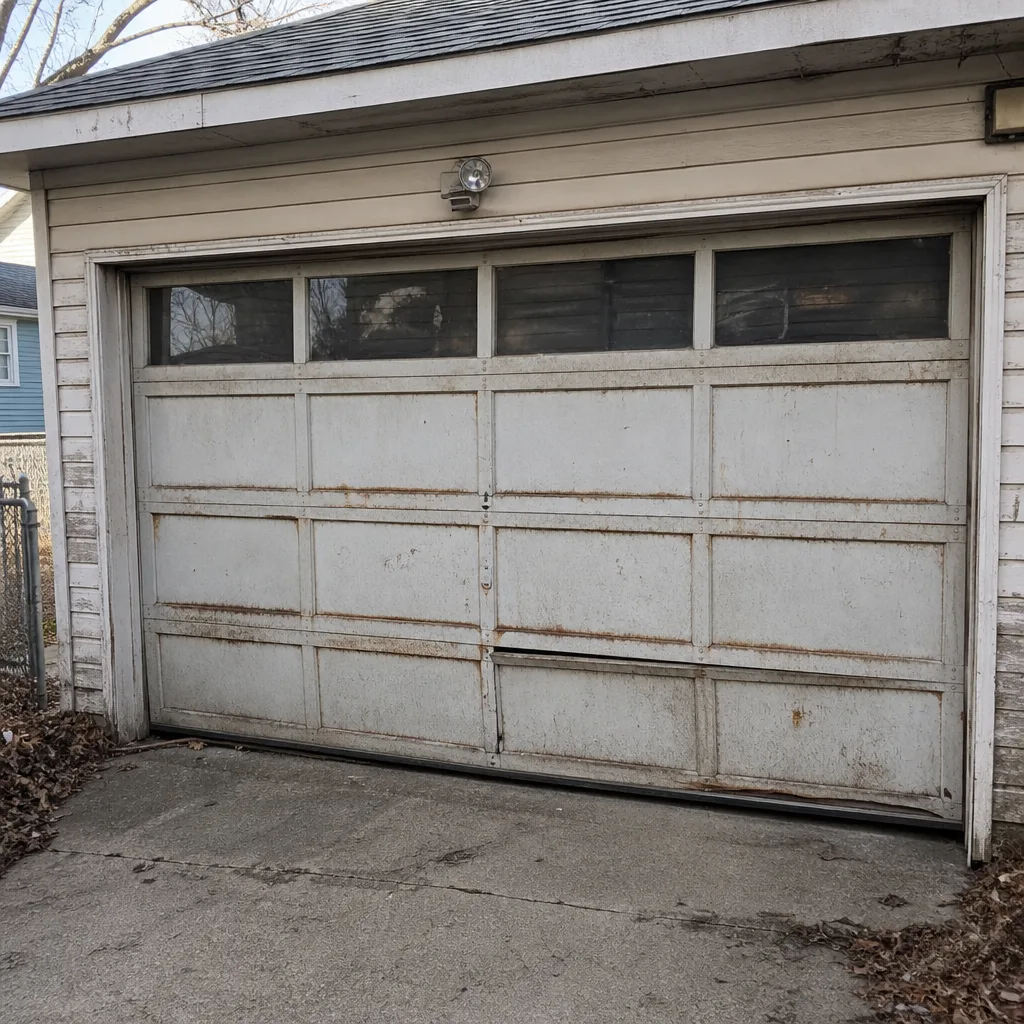 Before
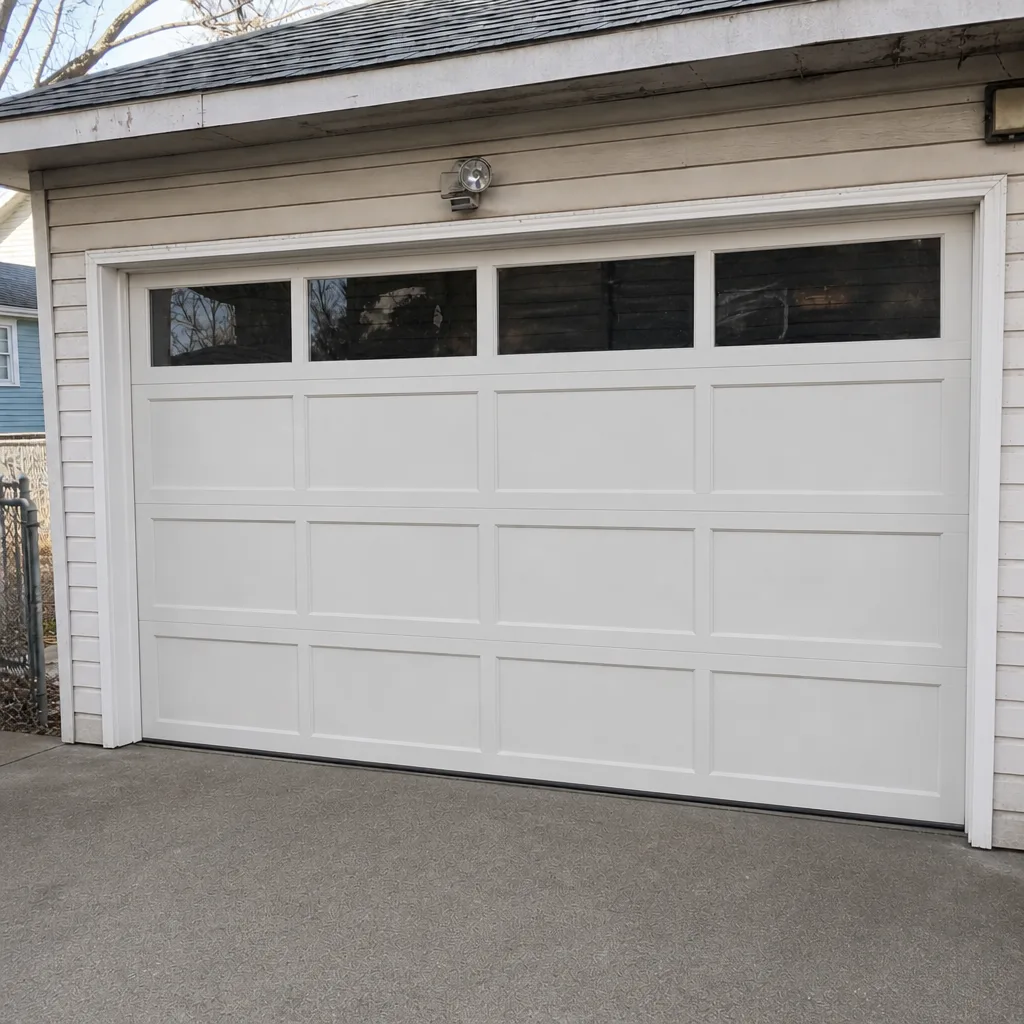 After
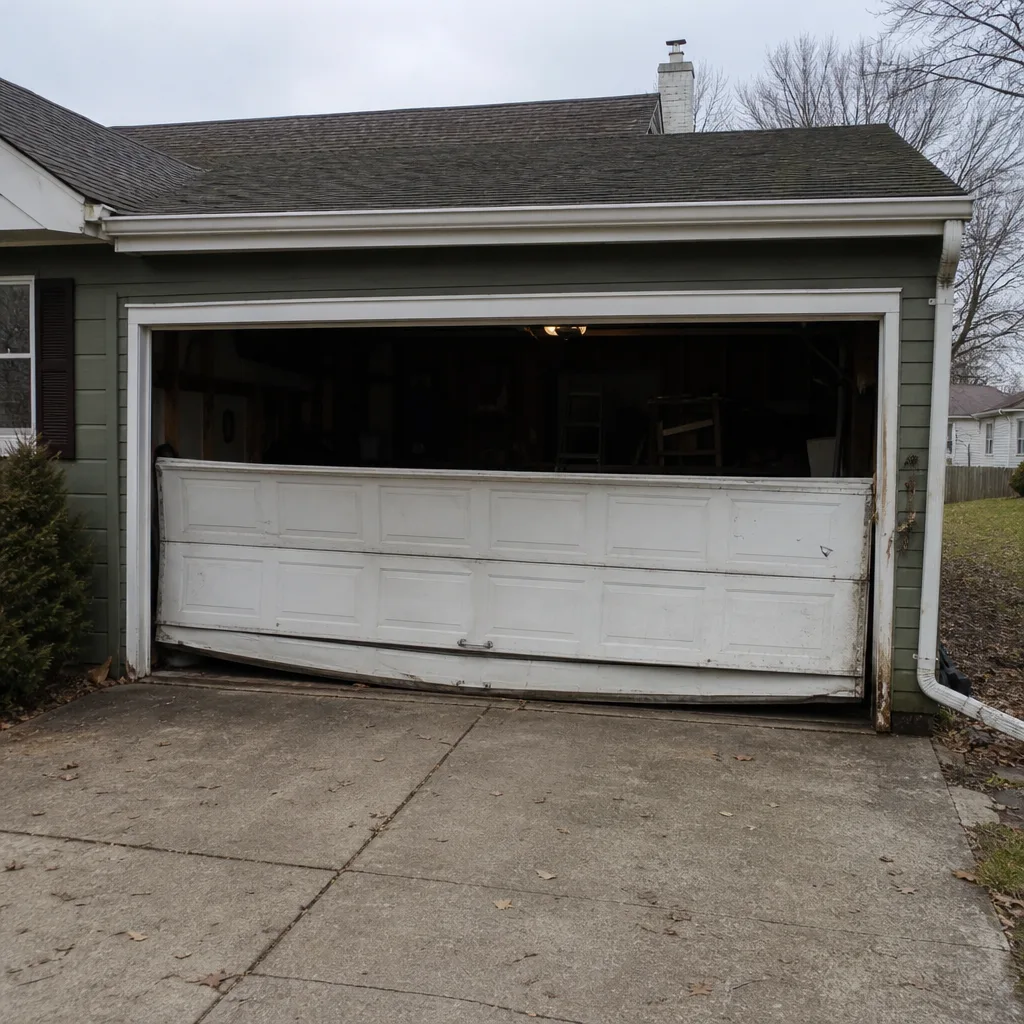 Before
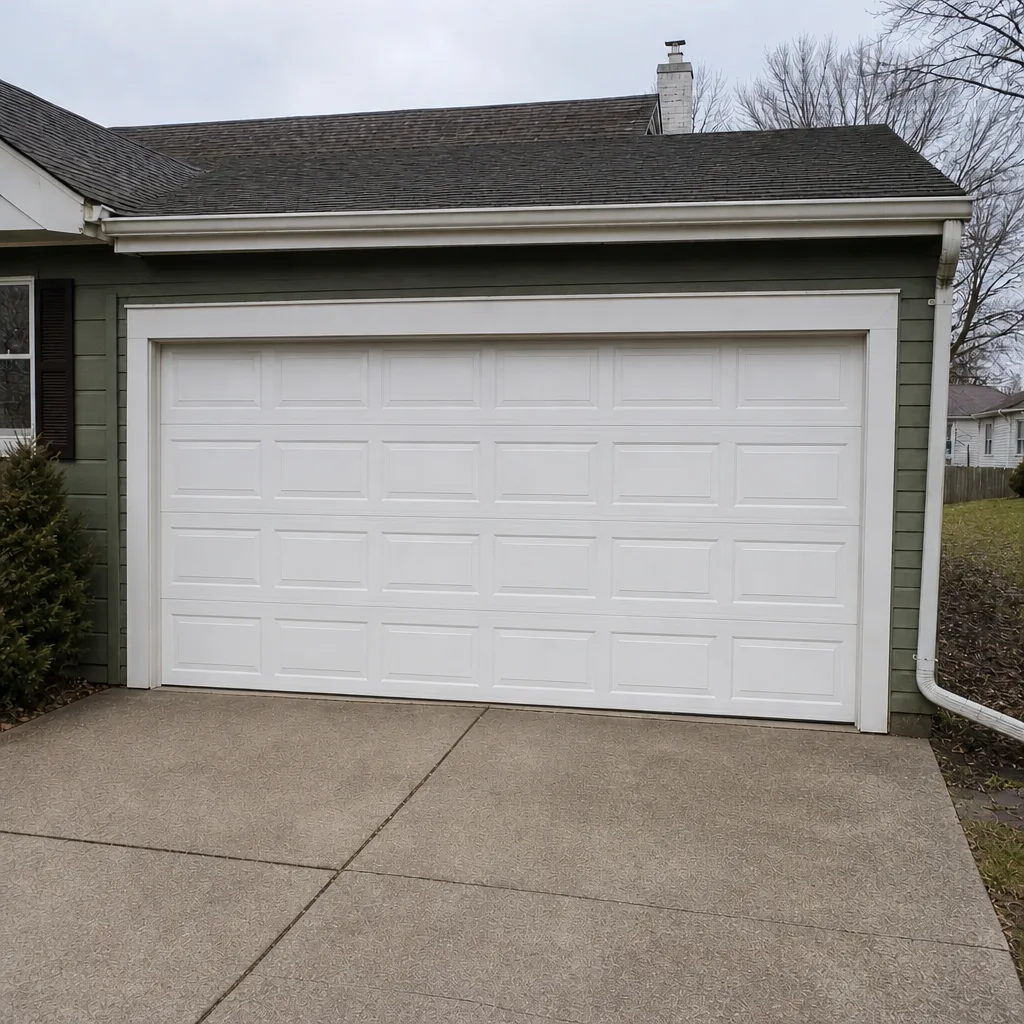 After
When to Call a Professional
Call a professional the moment a spring snaps, a cable goes slack, or the door comes down unevenly – those are the failures that signal high-tension parts are compromised, and they’re not something to troubleshoot on your own. The same goes for a door that’s clearly bent, a track that won’t stay straight, or an opener that’s running but not lifting the door. In Greater East Side, the older single-car alley garages we see most often fall into this category, and the housing stock makes the fix less standard than it would be on newer construction.
Garage Door Repair Greater East Side offers free estimates in Greater East Side – call (866) 989-9389 and we’ll take a look and quote the job in writing before anything starts. Our team services systems from LiftMaster, Chamberlain, Genie, Clopay, Amarr, Wayne Dalton, Craftsman, and Raynor, so brand compatibility rarely gets in the way.
Frequently Asked Questions
Spring and opener failures are the two most common repairs here, and both are usually scheduled quickly. Spring problems are more frequent in this climate because the freeze-thaw cycle works the springs harder than in milder parts of the country. If your door won’t lift or the opener is straining, that’s the call to make.
Single-spring repair in Greater East Side typically runs $180 – $340. A matched pair is usually replaced together, so a pair costs roughly twice the single-spring estimate. The written quote you agree to before work starts is the price – call (866) 989-9389 for an exact number, and estimates are free.
Same-day booking is the goal for repair calls like stuck doors, broken springs, and openers that won’t respond. Emergency service is a core part of what we do rather than an add-on, so the call still moves forward when a door fails outside normal hours. Call (866) 989-9389 and we’ll get you on the schedule.
No – the price is quoted and agreed before any work starts. If something changes the scope after a technician looks at the door (like a frame issue that wasn’t visible on the phone call), we tell you before we proceed. You won’t get an invoice that’s bigger than the quote without a conversation first.
The local professionals we connect you with are licensed and insured as their state requires. Garage doors are all we do, so the technicians you reach are working on this trade exclusively rather than splitting time across other work. Our technicians have up to 15 years of experience.
Most cities require a permit for a garage door replacement or structural change, so it’s worth asking the city’s building department about your specific address before work is scheduled. The answer can vary based on whether the work is a direct swap or involves framing. The written estimate should spell out what’s included on the permit side.
The Bottom Line
Garage doors in Greater East Side face a tougher set of conditions than the advice you’re being sold. Freeze-thaw cycles, road salt, single-car detached garages, and a thinner pool of real specialists all change the math – from which door material is worth the money to which company deserves the call. The short version: steel or insulated steel is the reliable choice for most Greater East Side homes, spring and opener repairs should always go to a trained professional, and a written quote agreed before work starts is the number that matters. The Garage Door Repair Greater East Side page covers the whole service lineup if you want the full picture before you call.
Call (866) 989-9389 for a free estimate. The written quote comes first – that’s the price you pay.
Contact
Ready to sort out your garage door? Garage Door Repair Greater East Side handles repair, opener service, spring replacement, and full installation across the East Side’s older housing stock and newer construction alike. Call (866) 989-9389 for a free estimate, and we’ll quote the job in writing before any work starts. Free estimates, and a straightforward answer to whatever your door is doing.
Written by the team at Garage Door Repair Greater East Side.