Garage Door Repair: Repair or Replace? How Greater East Side Homeowners Decide
Most homeowners in Greater East Side ask us the same question: is this door worth fixing, or is it time for a new one? Here’s the honest short answer. If the door is structurally sound and only one part has failed, repair usually wins. If three or more systems are worn at once, replacement is often the cheaper path over the next year and a half. The trick is knowing which situation you’re in, and that’s what this guide walks through.
If you’d rather not work it out alone, call us at (866) 989-9389 and we’ll talk it through with you.
Why door age alone doesn’t answer the question
A ten-year-old door isn’t automatically a repair case, and a ten-year-old door isn’t automatically a replacement case either. The number on the calendar tells you almost nothing on its own. What matters is the shape the door, the opener, and the repair history are each in right now.
A door that’s been well cared for and only needs a new spring is a repair, full stop. A door the same age with a failing opener, springs at the end of their life, and a cracked bottom panel is a different story. That’s three separate repair bills landing within eighteen months, and together they usually cost more than putting that money toward a new door.
In our experience across Greater East Side, the homeowners who end up frustrated are the ones who made the call on age alone. They patch one part, then another, then another, and by the third visit they’ve spent replacement money on a door that still isn’t right. Here’s a better framework.
The three-factor framework: score each one honestly
Look at three things together, not separately. When you weigh them at the same time, the decision usually makes itself.
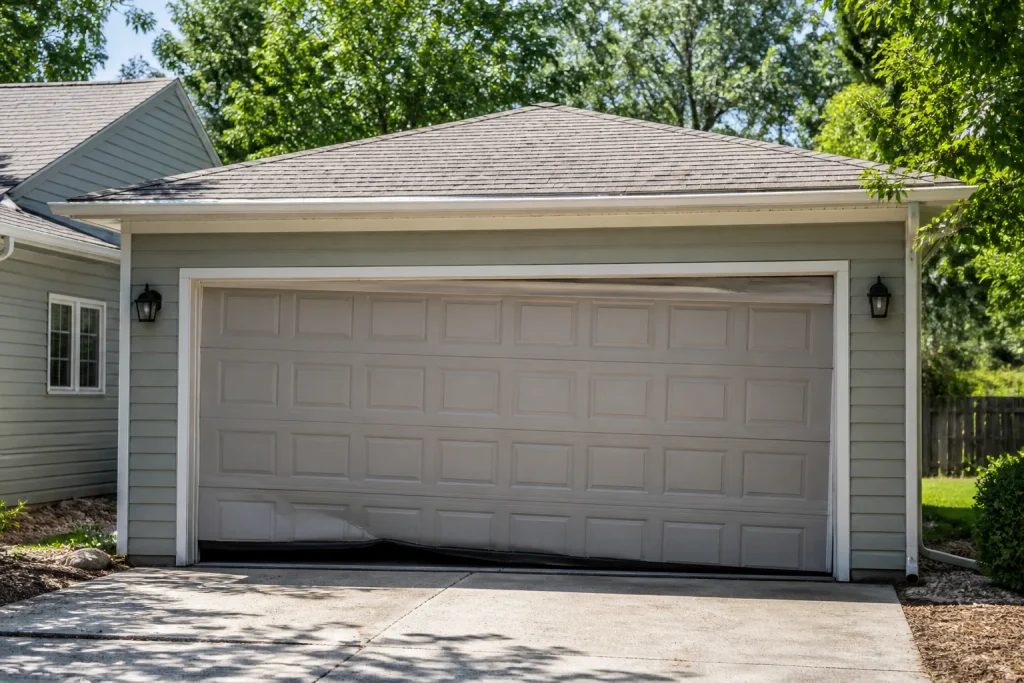
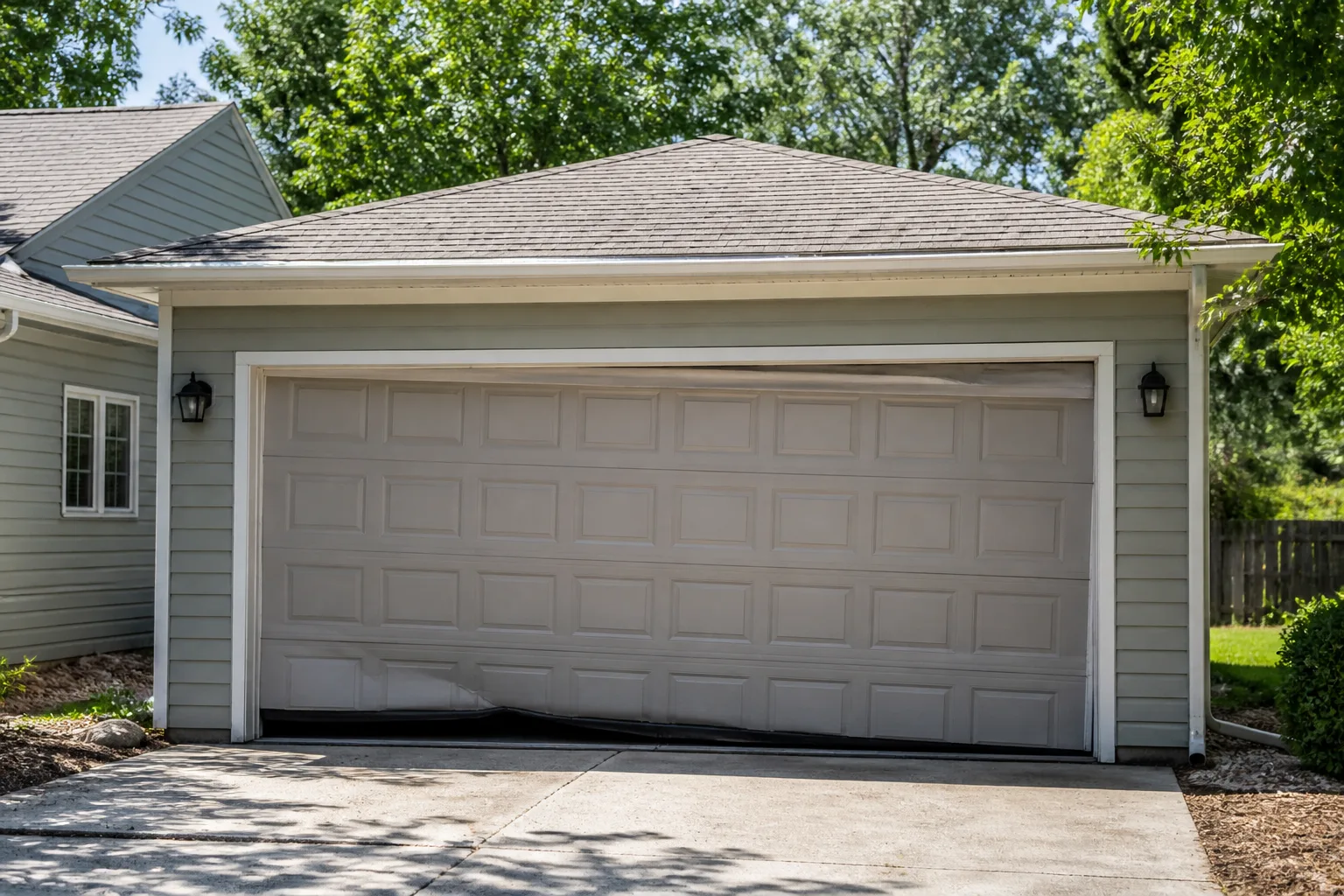
1. Structural integrity of the door itself. Stand back and look at the panels. Are they flat and even? Does the door sit level in the opening? Are there cracks, dents, or rot in the bottom section? A door with sound panels, straight tracks, and a solid frame is a strong repair candidate. One with warped or waterlogged panels is not.
2. Age and condition of the opener system. A modern opener that’s quiet, responsive, and matched to your door is worth keeping. An older chain-drive unit that’s loud, jerky, or trips the safety reverse is telling you something. If the door is fine but the opener is on its way out, that’s a clear repair or replace-the-opener case, not a replace-the-door case.
3. Accumulated repair history. Write down the last two or three years of fixes. One repair is normal wear. Two is worth watching. Three or more in quick succession means you’re chasing a system that’s past its useful life.
Score each factor as strong, mixed, or weak. Two weak scores and the math starts pointing toward replacement. One weak score and you’re almost certainly in repair territory.
The damage that makes replacement the smarter call regardless of age
Some damage overrides the framework. If you see any of the following, a new door is usually the more sensible financial path even if the door isn’t old.
- Severe panel warping. Once panels bow, they don’t straighten back out. Replacement panels are an option, but on an older or discontinued model, matching them is a headache.
- Track alignment damaged by an impact. A car bumper or a heavy hit can twist tracks beyond what realignment fixes. New tracks rarely match the cost of a new door once the panels are involved too.
- Widespread rot or water damage in a wood or composite door. Soft spots mean the structure has already lost strength, and patching won’t restore it.
- Repeated panel cracks across multiple sections. That’s a door telling you it’s done.
If any of these describe your situation in Greater East Side, get an honest assessment before you spend money on repairs you’ll regret. We work on doors from Clopay, Amarr, and other major makers, so we can speak to what’s genuinely fixable on your model.
The real cost comparison: today’s bill versus five years of costs
This is where most people undercount. The comparison isn’t “repair vs. new door” at today’s price. It’s “repair plus five years of projected maintenance vs. new door plus five years of minimal maintenance.”
On the repair path, expect to budget for the parts that are starting to wear: springs eventually, rollers, cables, maybe an opener in a year or two. Each is a normal repair, but together they add up. On the replacement path, a new door and opener come with a fresh start, and the next several years are usually quiet apart from routine service.
Here’s the rule we use in our work across Greater East Side: if the projected cost of repairs over the next eighteen months lands near or above the cost of a new door, replacement is the more economical call. If it’s well under, repair is the smarter spend. A written estimate for both paths is the way to compare honestly, and any reputable shop will give you that.
If you’re dealing with a broken opener specifically, our garage door opener repair team can tell you whether the opener is worth saving or due for replacement.
What Minnesota’s climate does to aging doors
Freeze-thaw cycles are hard on garage doors. As temperatures swing between freezing and thawing, moisture works its way into the seams, seals, and bottom edges of the door, then expands when it freezes and contracts when it thaws. Over seasons, that cycle takes a real toll.
Wood and composite doors are hit hardest. Their bottom sections absorb moisture and rot more quickly. Steel doors usually fare better, but the weather seals and the bottom weatherstrip wear faster than people expect. A worn bottom seal lets in snow melt and road spray, which accelerates the rot at the bottom edge.
The practical takeaway for Greater East Side homeowners: if the bottom seal or the bottom panel of your door is showing wear, that’s a repair worth doing early. Letting a worn seal go through one more winter often turns a cheap fix into a panel replacement. Swapping a bottom seal is one of the least expensive repairs on the list, and catching it early protects the door.
When to call a pro
A few garage door jobs are fine for a homeowner. Lubricating rollers, wiping down panels, and tightening visible bolts are all low-risk. But high-tension springs and cables are genuinely dangerous. Touching them without proper tools and training can cause serious injury, and it’s how a lot of emergency room visits happen. Leave those to trained technicians.
Call a pro if you’re dealing with:
- A snapped or stretched spring (never attempt this yourself)
- A door that’s come off its tracks or is hanging unevenly
- An opener that won’t reverse or behaves unpredictably
- Any panel or track damage from an impact
- A door that won’t open or close at all
Our technicians have up to 15 years of experience with these components, and we treat spring work with the respect it deserves. Emergency service is part of what we do, not an upcharge surprise, so if the door fails on you, call us and we’ll sort it out.
Related services in Greater East Side: if your door is beyond repair and a new one makes sense, our garage door installation team can walk through sizing, style, and materials, and every quote is written out before any work starts.
How to get a straight answer from a technician
The best way to protect yourself from a sales pitch in either direction is to ask specific questions and listen for specific answers. A good technician will give you a real breakdown.
- Ask what’s failing and what’s still solid. A straight answer names the parts, not just “it’s shot.”
- Ask for the repair cost and the replacement cost side by side. Anyone pushing one path without showing the other is steering.
- Ask how long the repair is likely to last. “A few more years” with specifics beats “should be fine.”
- Ask whether a repair today keeps the door safe. Safety comes before cost.
If you’re in Greater East Side and want an honest read on your door, we’ll give you a written estimate for both paths and let you decide. Estimates are free, and the price we quote is the price you pay. That’s how a decision like this should go.
We service openers from Chamberlain, Genie, and other major brands, so there’s no runaround about compatibility when the opener side of your decision comes up.
The Bottom Line
Here’s the short version for Greater East Side homeowners:
- Don’t decide on age alone. Weigh structural integrity, opener condition, and repair history together.
- Two weak factors point toward replacement. One weak factor usually means repair.
- Severe panel warping, impact-damaged tracks, or widespread rot override the framework; replacement is the smarter financial call.
- Compare projected five-year costs, not just today’s repair bill.
- Catch worn bottom seals before winter to protect the door.
- Leave springs and cables to trained technicians.
If you’re in Greater East Side and need help, Garage Door Repair Greater East Side offers free estimates. Call (866) 989-9389 and we’ll help you figure out the right path for your door.
Frequently Asked Questions
No. Visual inspection catches warped panels, rot, and track damage, but it won’t tell you the condition of the opener or the springs. A proper assessment includes opening and closing the door, checking the balance, and looking at the opener’s behavior. Call (866) 989-9389 for a free estimate if you’re unsure.
Usually not. Three or more repairs in quick succession is a strong signal that the door is past its useful life, and the money is better spent toward a replacement. A written estimate for both paths will make the comparison clear. Call us for a free estimate.
Springs are a normal wear item and replacing them is a routine repair, not a reason to replace the door. They’re also dangerous to handle yourself, so leave spring work to trained technicians. Call (866) 989-9389 if a spring has snapped.
Safety comes first regardless of the repair-versus-replace call. Test the opener’s auto-reverse, check for uneven movement, and look for any track or cable damage. If something seems off, call us and we’ll assess it honestly.
Written by the team at Garage Door Repair Greater East Side.
Need Garage Door Help?
Call Garage Door Repair Greater East Side - the local pro we connect you with is licensed and insured, here with fast after-hours help in Greater East Side.
(866) 989-9389